Mark Osborne’s MORE and the Cost of Ambition
Released in 1998, MORE is a stop-motion mixed-media short film written and directed by Mark Osborne that stands as one of the most influential independent animated shorts of the late 1990s. Created while Osborne was a student at California Institute of the Arts (CalArts), the film achieved rare crossover recognition—earning an Academy Award nomination and winning Best Short Film at the 1999 Sundance Film Festival—a remarkable accomplishment for a student-originated stop-motion work.
At its core, MORE is a bleak and deeply human parable about ambition, nostalgia, and the emotional price of success. The film follows an aging inventor trapped in a joyless, underground society populated by identical, emotionally vacant drones. His existence is cold, repetitive, and drained of meaning. Haunted by memories of his younger, more carefree days, the inventor pours himself into completing a secret invention—one he believes will finally give his life purpose and worth.
When the invention is completed, it does indeed transform his world and elevate his status. But Osborne resists offering a triumphant resolution. The inventor’s success comes with sacrifice, and the film ultimately reveals that the essence of inspiration—the emotional spark he longs to reclaim—cannot be manufactured, replicated, or bought. What he gains materially, he loses spiritually.
One of MORE’s most powerful creative choices is its complete absence of dialogue. Osborne relies entirely on visual storytelling, sound, and rhythm to communicate character psychology and narrative progression. This decision gives the film a universal quality, allowing it to transcend language and cultural boundaries while sharpening its allegorical clarity. Every frame functions symbolically, encouraging interpretation rather than explanation.
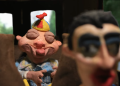
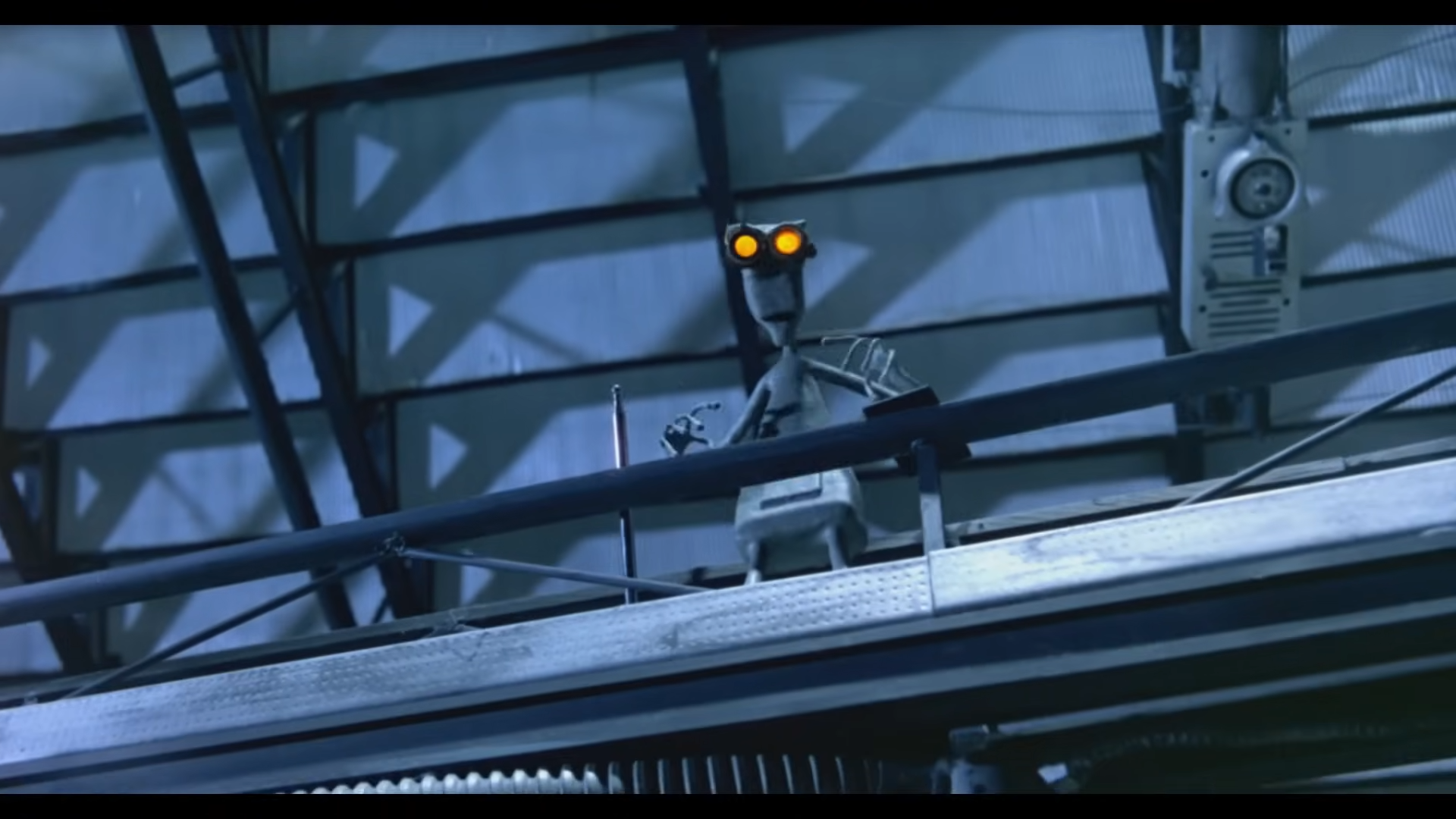
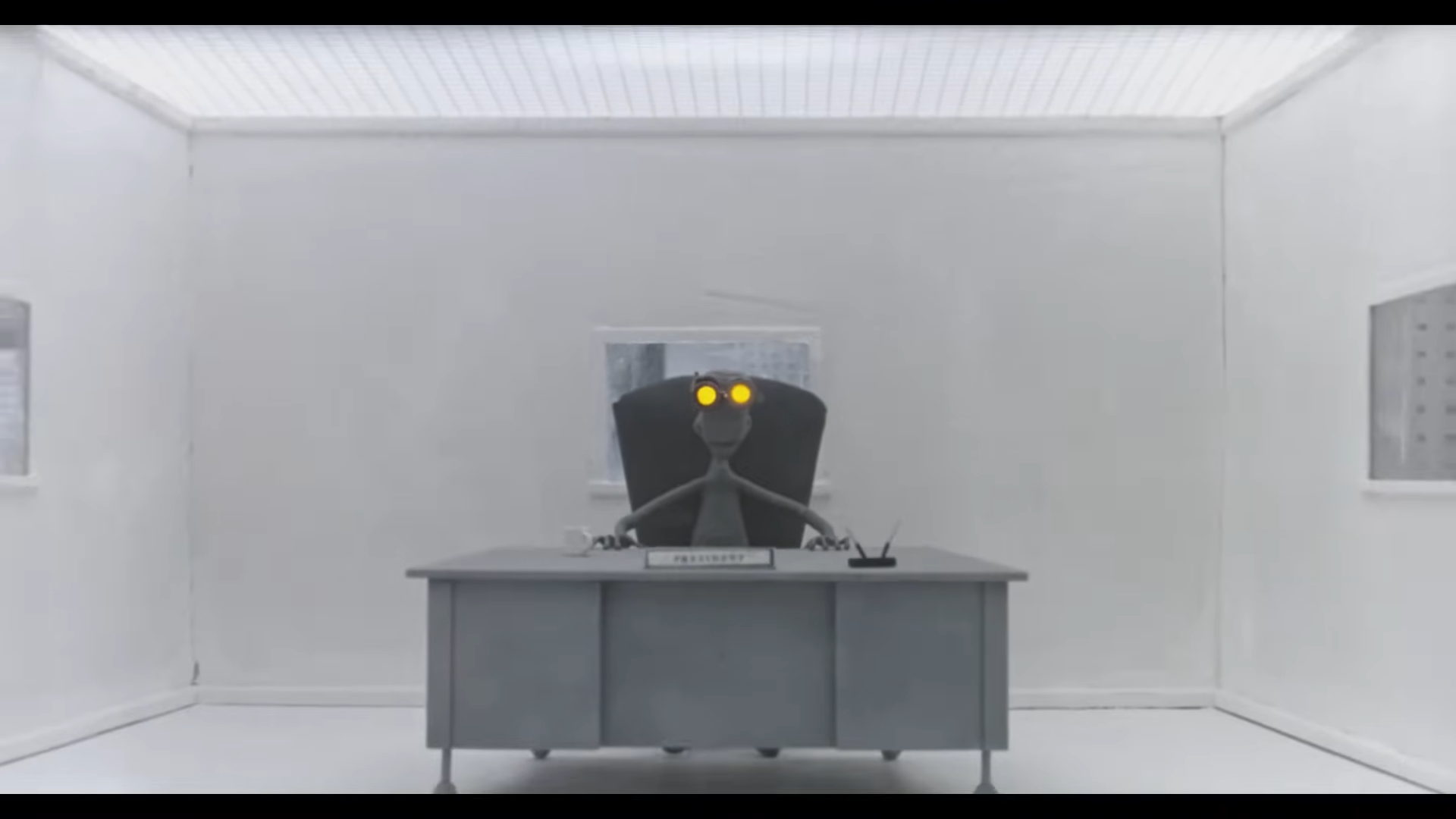
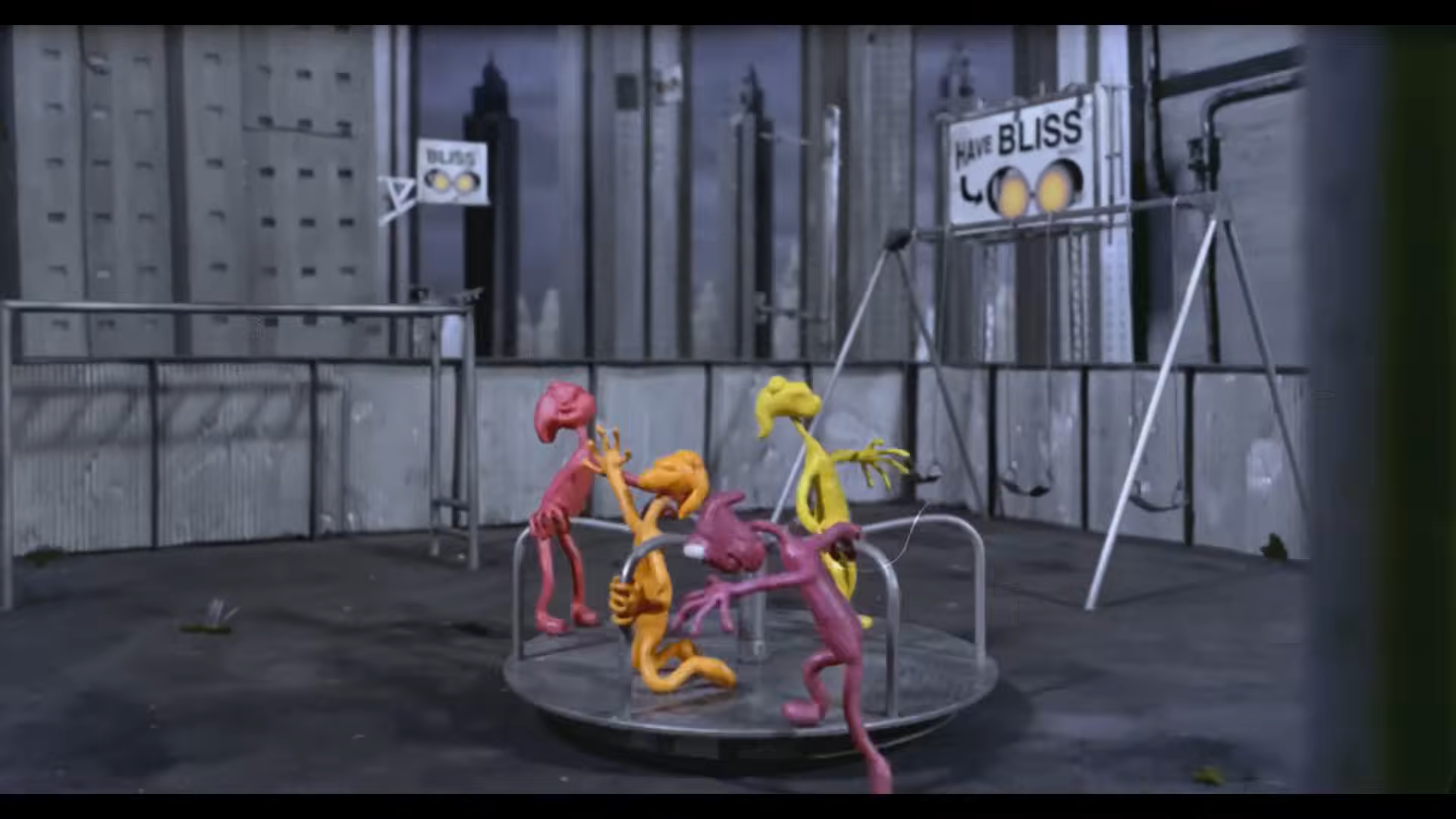
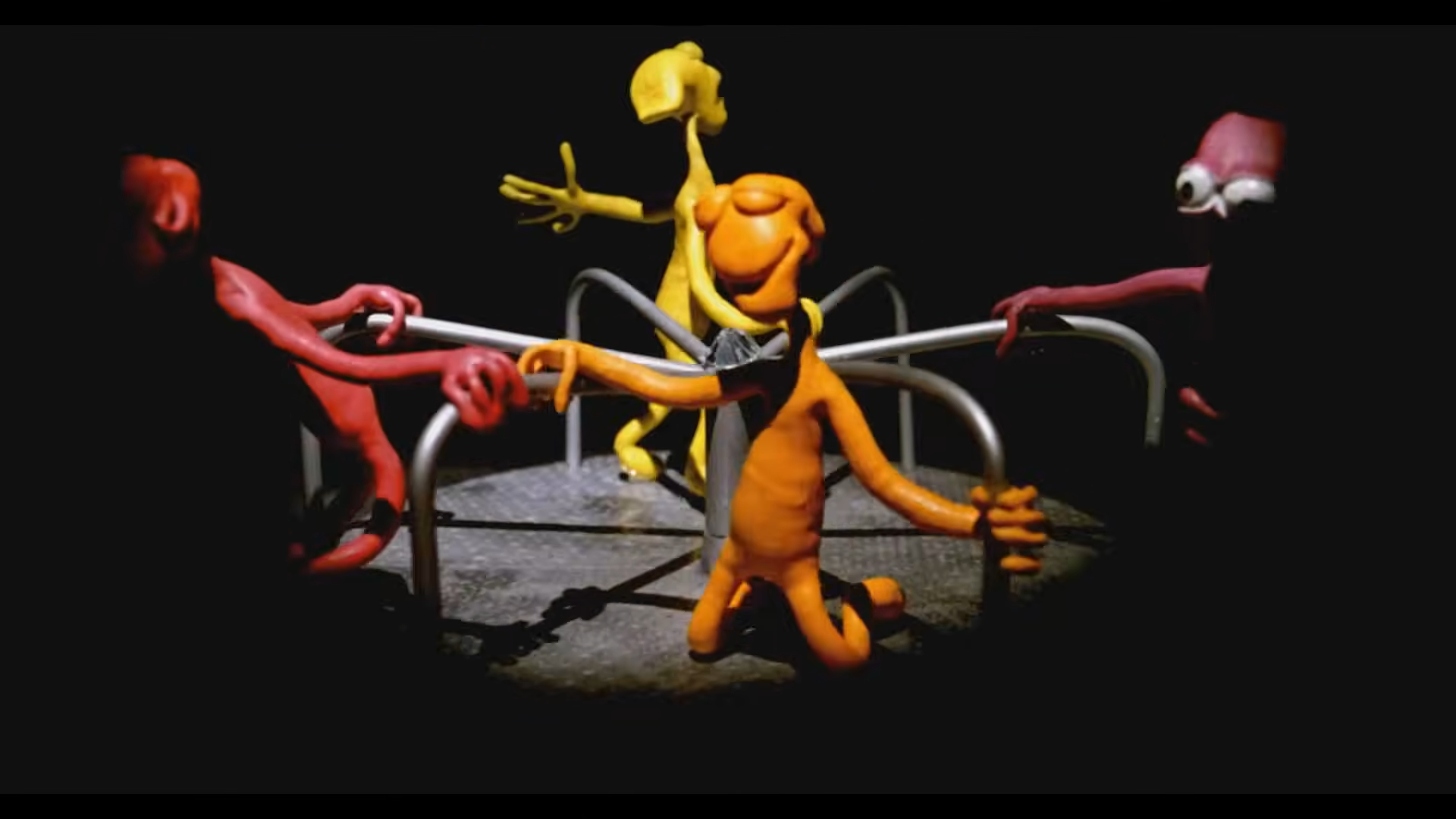
The stop-motion puppets are deliberately stylized and emotionally restrained. Elongated limbs, rigid posture, and hollow, unblinking eyes give the characters an unsettling, almost mechanical presence. Their limited facial expression places emphasis on movement and staging, reinforcing the sense that this society has traded individuality for efficiency. The inventor’s physical stiffness mirrors his emotional repression, making his longing for meaning all the more poignant.
Equally integral to the film’s impact are its environments. The underground world is claustrophobic and oppressive, dominated by concrete textures, industrial machinery, and a muted, nearly monochromatic palette. As the inventor ascends socially, the spaces around him grow larger and more polished—but no warmer. The architecture becomes grander and emptier, underscoring the film’s central irony: elevation does not equal fulfillment.
Lighting and cinematography further enhance the film’s emotional weight. Stark contrasts, deep shadows, and carefully controlled highlights lend MORE an expressionist tone, emphasizing isolation and psychological unease. Even moments of apparent success feel cold and artificial, visually reinforcing the cost of the inventor’s transformation.
Music plays a defining narrative role. The film is set primarily to Elegia by New Order, a haunting, elegiac track whose slow build and mournful atmosphere perfectly mirror the film’s themes of longing and loss. Rather than functioning as background accompaniment, the music acts as an emotional spine, shaping pacing, mood, and meaning. The synchronization between image and sound is meticulous, turning the score into the film’s unspoken voice.
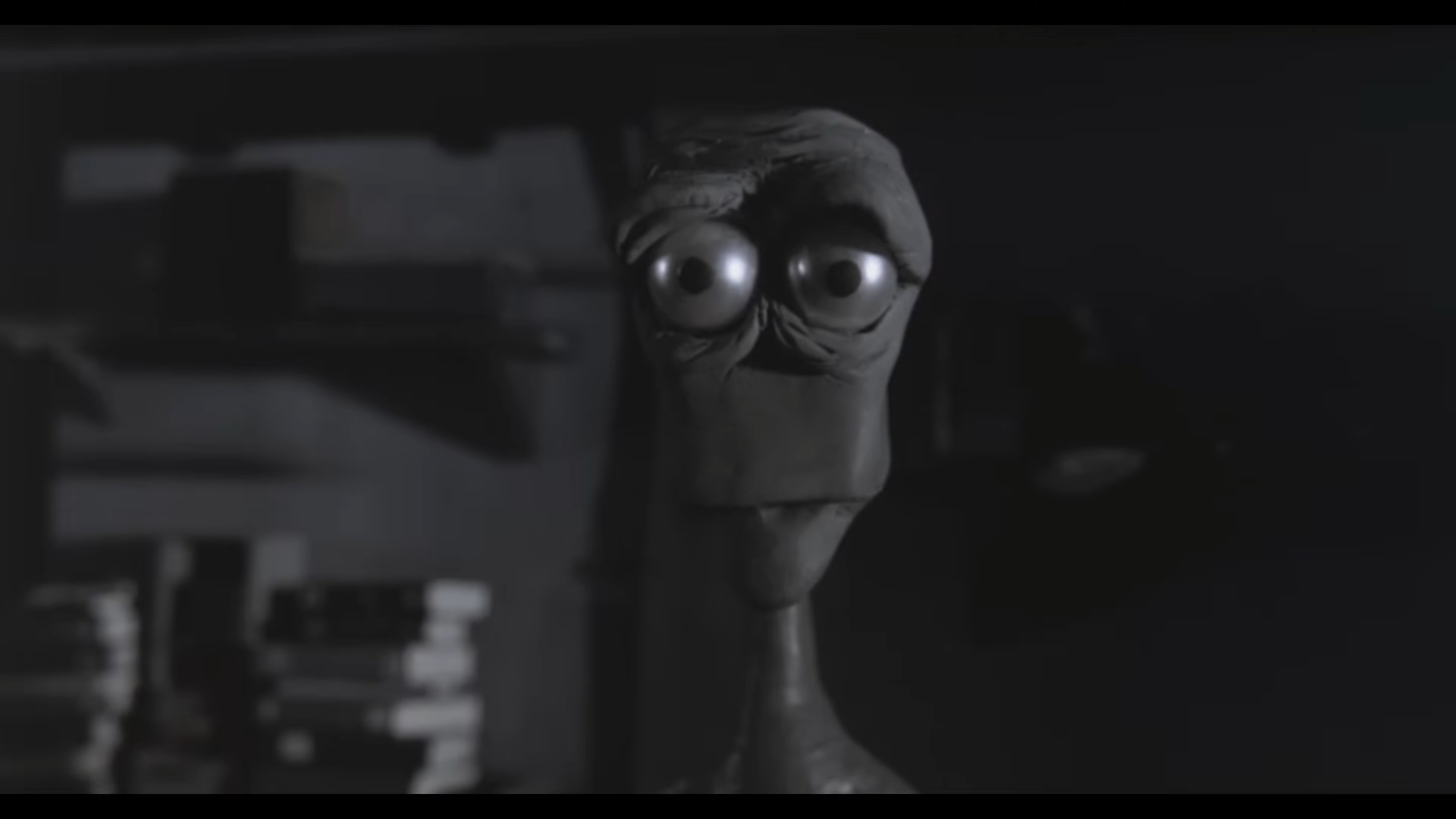
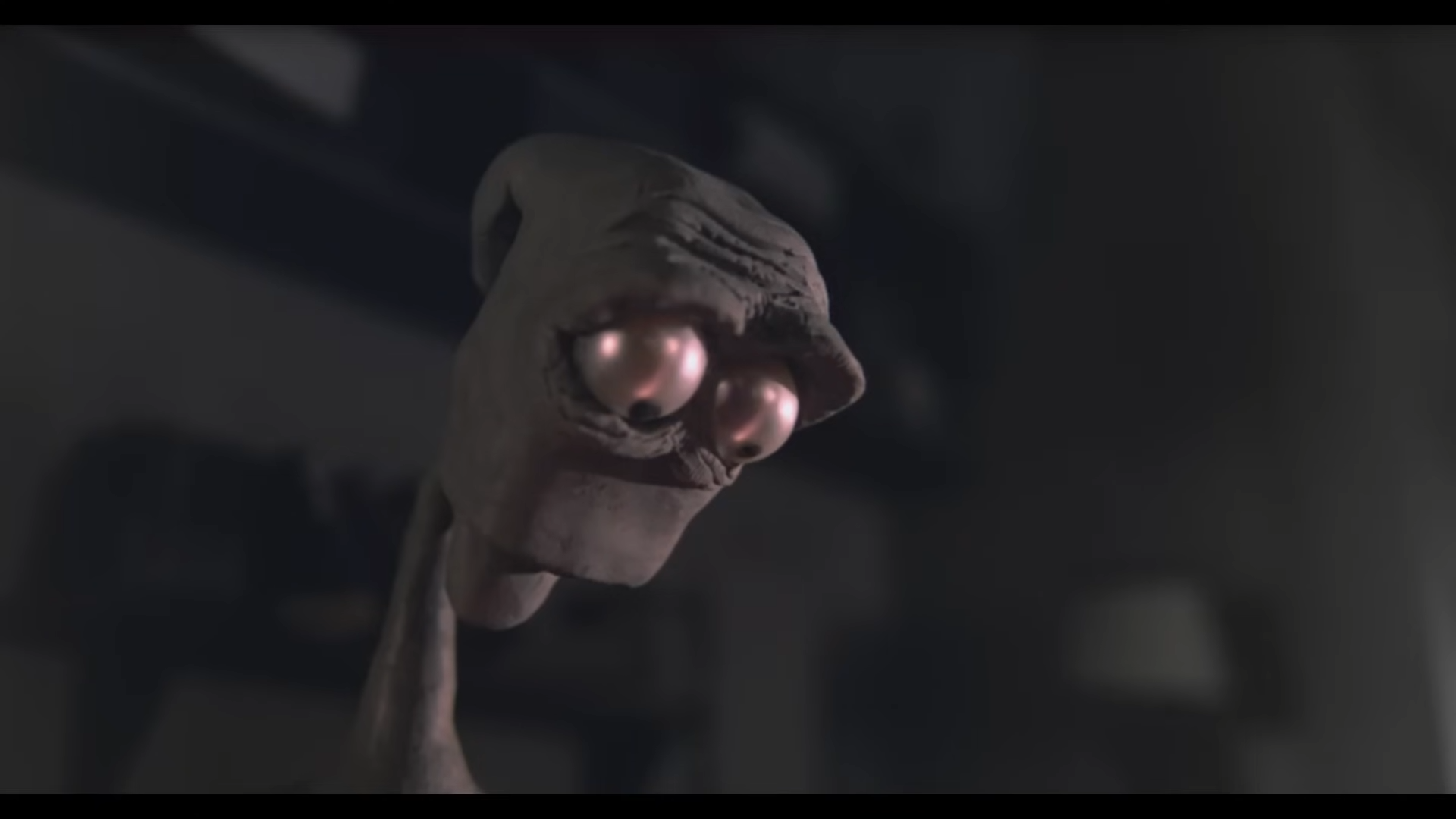
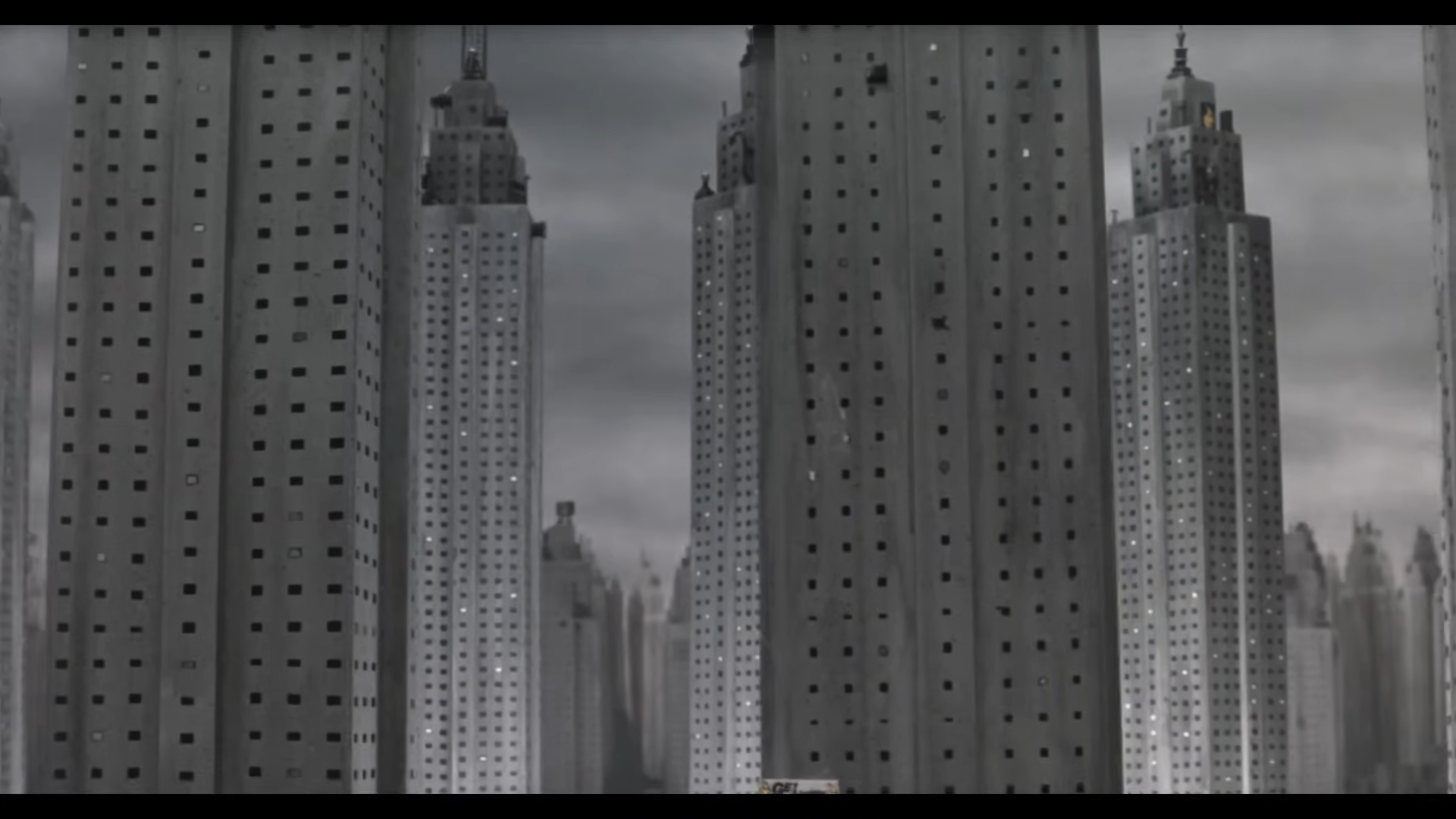


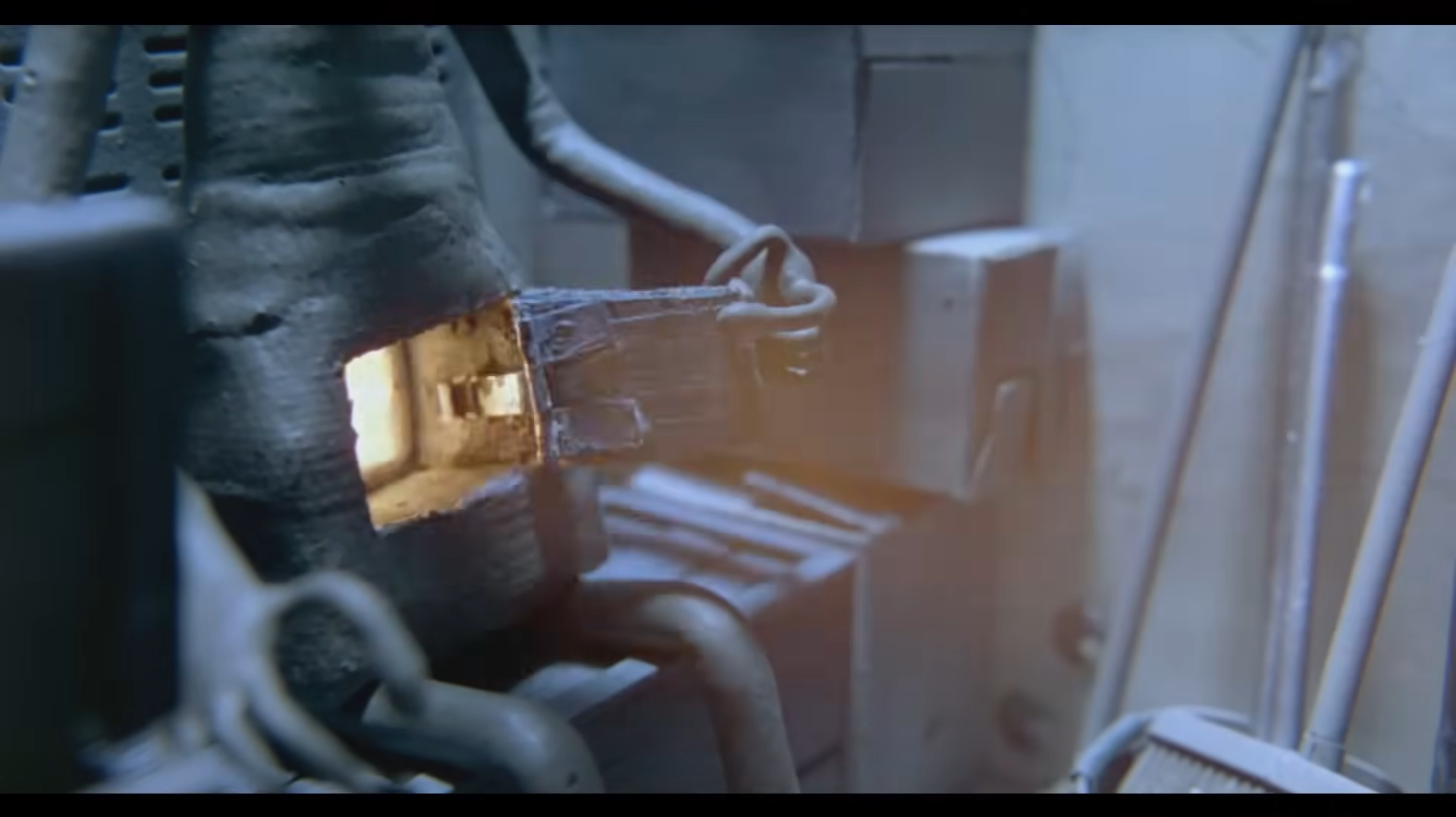

From a production standpoint, MORE was a substantial collaborative effort. Osborne served not only as writer and director but also as one of the stop-motion animators, working alongside David J. Candelaria and Nick Peterson. The film’s handcrafted quality is evident in every frame, from the puppets and sets to the mixed-media elements and compositing. The project received production support and donated services from CalArts and several industry partners, including IMAGICA USA Inc. and Consolidated Film Industries, reflecting the scale and ambition of the undertaking.
The film’s success proved to be a pivotal moment in Osborne’s career. The Academy Award nomination and Sundance win positioned him as a filmmaker capable of pairing strong visual design with emotionally resonant storytelling. He would later co-direct Kung Fu Panda and direct The Little Prince, but many of the thematic concerns present in those features—identity, fulfillment, and the tension between external success and inner truth—are already fully formed in MORE.
More than twenty-five years after its release, MORE remains strikingly relevant. Its critique of materialism and the illusion that meaning can be engineered or purchased feels timeless, especially in a culture increasingly defined by productivity, status, and consumption. For stop-motion artists and animation students, the film continues to serve as a benchmark—proof that the medium can deliver sophisticated, adult storytelling with emotional depth and philosophical weight.
MORE endures not because of spectacle, but because of its clarity of vision. It stands as a reminder that stop motion, at its best, is not merely a technical exercise, but a profoundly expressive cinematic language—one capable of exploring the quiet tragedies that unfold when ambition eclipses the human heart.
Sources
-
YouTube – MORE (1998), Official Upload
https://youtu.be/cCeeTfsm8bk -
IMDb – MORE (1998)
https://www.imdb.com/title/tt0183922/ -
Sundance Institute – Festival Archives
https://www.sundance.org -
California Institute of the Arts – Animation Program
https://calarts.edu