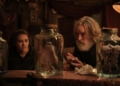
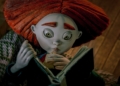
The Simpsons — Nightmare Before Christmas opening by Stoopid Buddy Stoodios. Watch on YouTube.
Springfield’s familiar silhouettes take on a different kind of life when they become puppets. For the opening of Treehouse of Horror XXXVII, Stoopid Buddy Stoodios transforms The Simpsons into a miniature tribute to The Nightmare Before Christmas, combining character animation with an exuberantly physical clay title sequence.
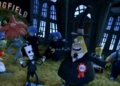
Bart takes on Jack Skellington’s spindly elegance, Homer becomes the Mayor, and Ned Flanders supplies an especially fitting Oogie Boogie. The joke works because both casts remain recognizable. These are not simply Simpsons figures wearing costumes: their proportions and performances have been reshaped around the visual language of Henry Selick’s film.
From familiar drawings to physical puppets
Director John Harvatine IV worked with Simpsons veteran David Silverman to translate the idea into dimensional characters. Harvatine describes a build involving sixteen puppets, including doubles, with hand-sewn costumes. Silverman’s on-site sketches helped the team settle the character designs quickly. [1]
The production photographs reveal the practical scale of that translation. Artists work among lighting equipment and supports, while the puppets occupy a landscape of miniature buildings and exaggerated Halloween shapes. Seeing a human hand beside a character is a useful reminder that even a brief television opening involves objects with real weight, dimensions, and limitations.
Harvatine describes the pleasure of solving Homer’s changing facial expression through straightforward replacement and turning techniques. The effect connects a remembered piece of movie magic to a new practical problem on the animation stage. Small mechanical choices become part of the character’s comic performance. [2]
Letting the clay misbehave
The opening’s title treatment gives another material its turn. The team sculpted worms in clay to form the lettering and retained an animator to develop the splattering finish. The resulting imperfections suit a sequence that is supposed to wriggle, collapse, and surprise. [1]
The completed opening is also a lesson in how much visual information can fit into a very short piece. Costume, silhouette, set dressing, and movement all have to establish the crossover immediately. The familiar characters do some of that work, leaving the animation free to push their grotesque new shapes.
Co-showrunner Tim Long discusses the casting choices, including the natural fit between Flanders and Oogie Boogie. The opening precedes the special’s traditionally animated stories; it is a distinct stop-motion contribution rather than a change of medium for the entire episode. [3]
Watch the finished sequence at the top, then compare it with the studio’s behind-the-scenes video and photographs below. The contrast makes the craftsmanship easy to appreciate: a crowded workshop becomes a tightly controlled burst of Halloween performance.
Behind the scenes
The Simpsons — behind the scenes at Stoopid Buddy Stoodios. Watch on YouTube.
Images from the production
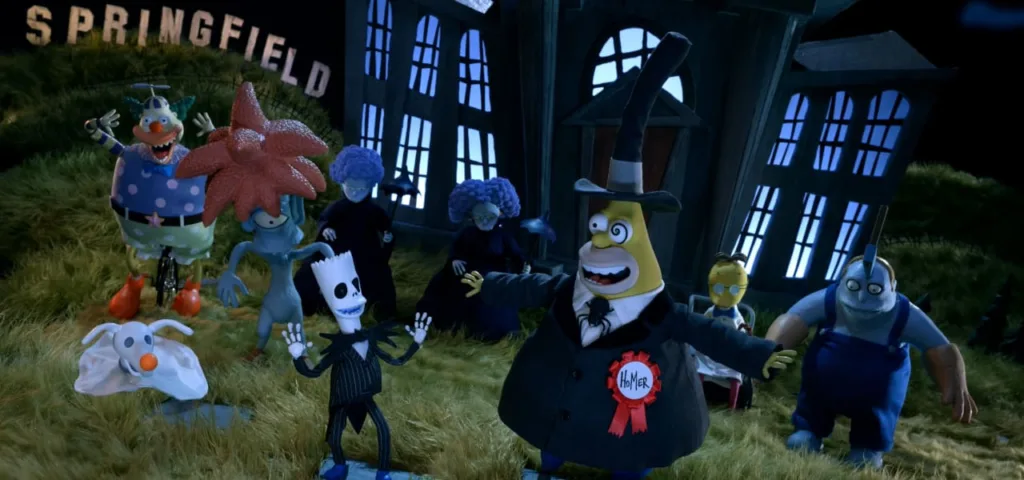
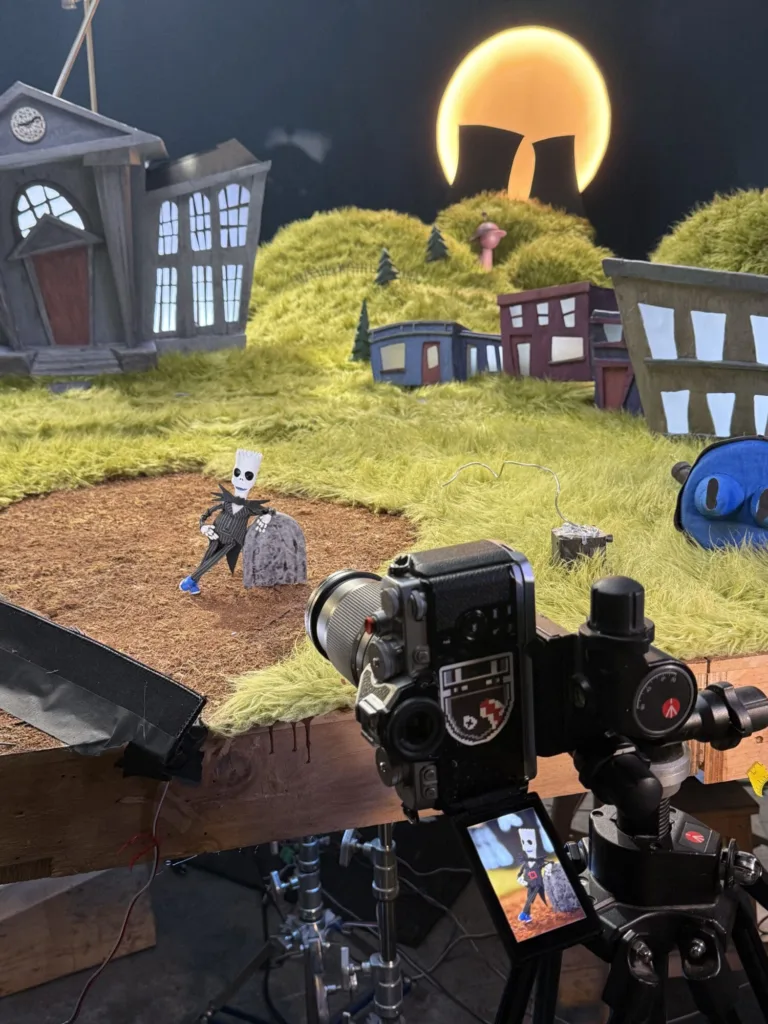
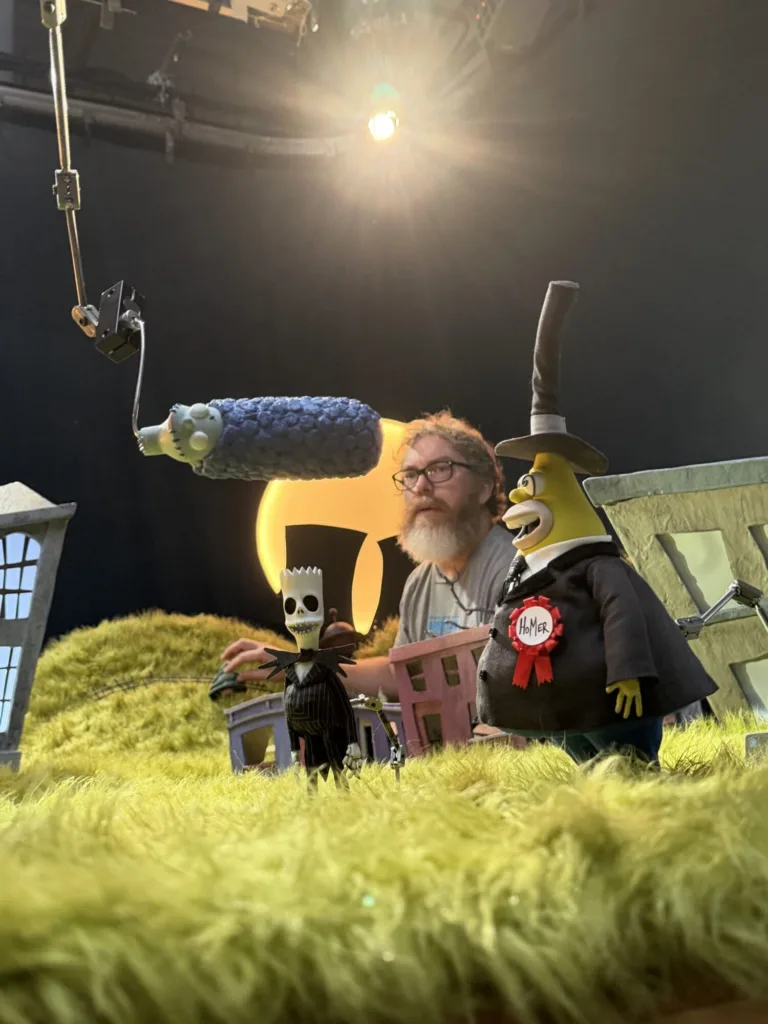
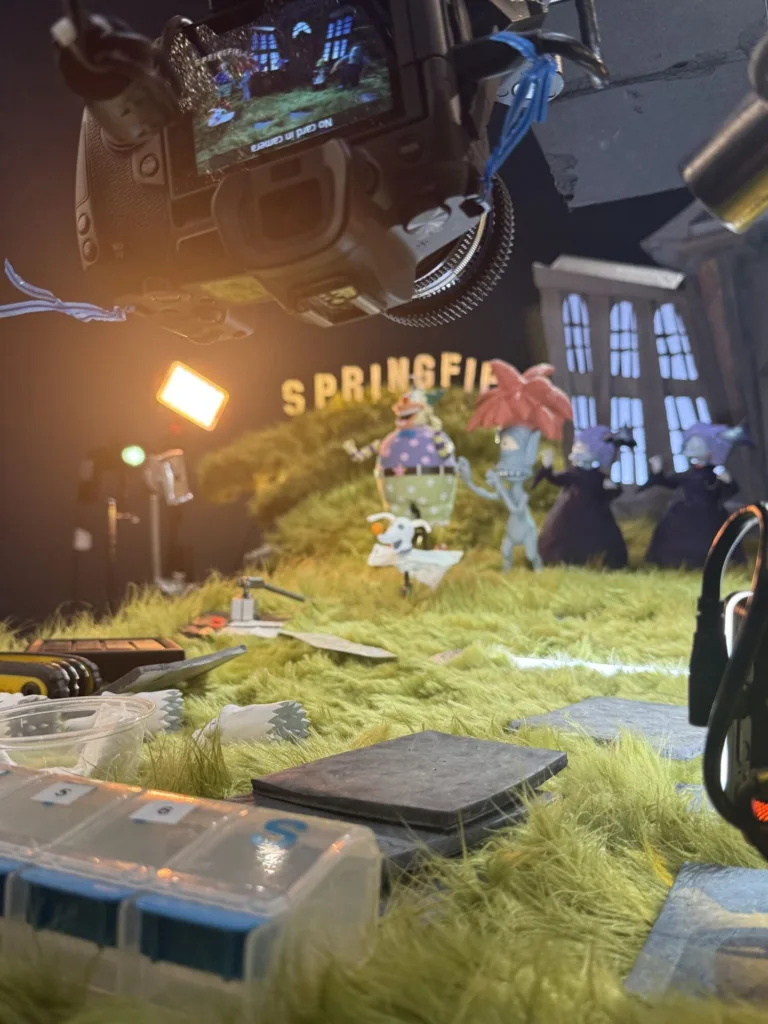
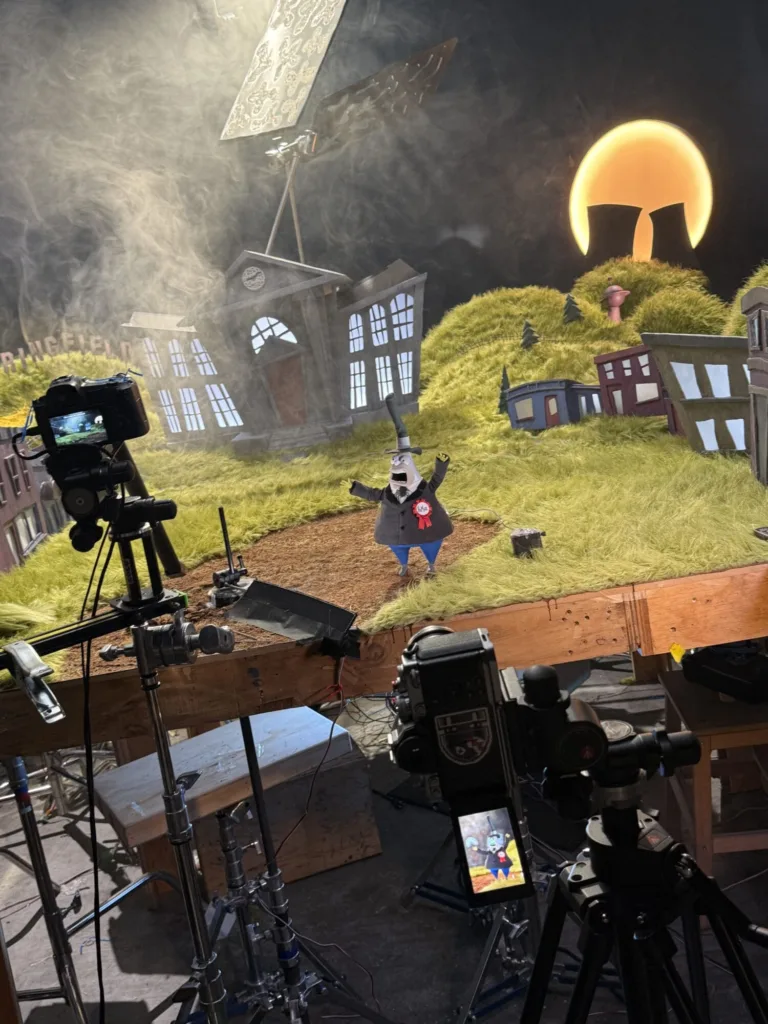
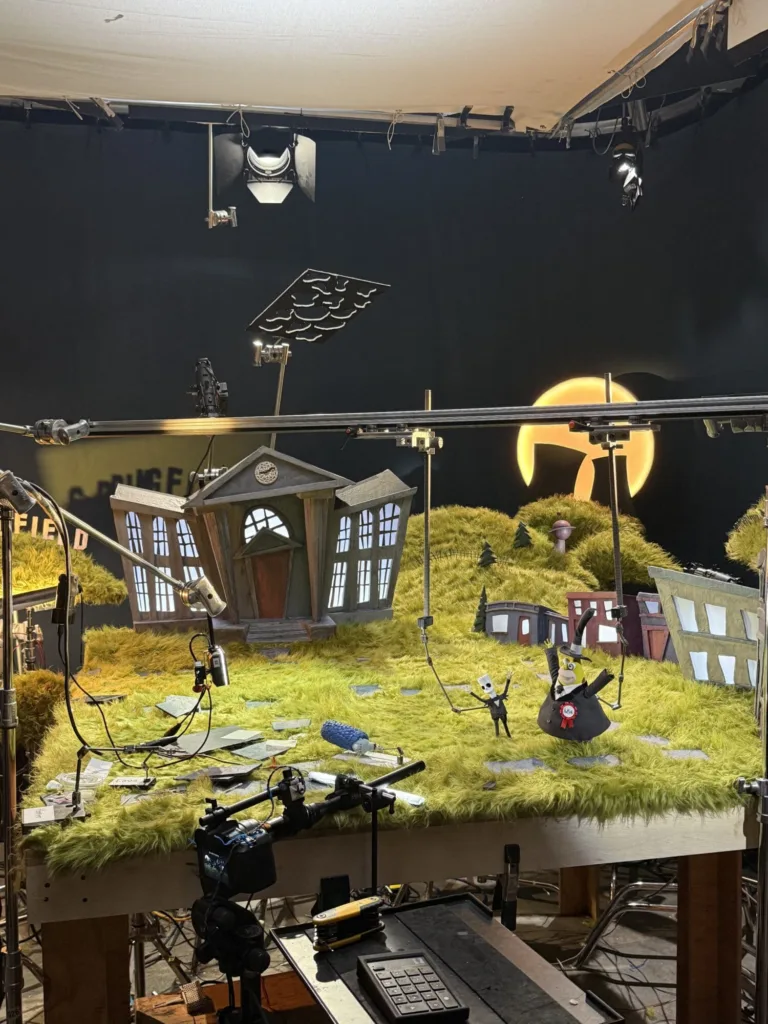
The Simpsons: finished imagery and behind-the-scenes production photographs from Stoopid Buddy Stoodios. The Simpsons © 20th Television. [1]
References
- Cartoon Brew — Production interview and accompanying imagery.
- Animation World Network — John Harvatine IV on the Simpsons stop-motion opening.
- Dread Central — Tim Long on the Treehouse of Horror casting choices.