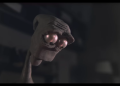
赤い蝋燭と人魚(The Red Candles and the Mermaid): A Tragic Japanese Fairy Tale Reimagined in Stop Motion
Stop motion has long proven itself to be an ideal medium for fairy tales that resist happy endings, and 赤い蝋燭と人魚 (The Red Candles and the Mermaid) stands as a striking example of how handcrafted animation can carry emotional weight, cultural memory, and quiet devastation all at once.
Created as a stop-motion short by Sayoko Konaka, Yōta Yasuda, and Tomohiro Yokoyama, the film was produced around 2013–2014 at アート・アニメーションのちいさな学校 (Art Animation Chiisana Gakkō, translated as “The Small School of Art Animation”) in Japan. Running approximately 11 minutes, the film adapts one of the most haunting works in Japanese children’s literature into a tactile, atmospheric miniature world.
The story originates from Ogawa Mimei’s 1921 fairy tale, a foundational text in modern Japanese children’s literature. Unlike many Western fairy tales that soften their conclusions over time, The Red Candles and the Mermaid remains unflinching. It tells of a mermaid who believes in human kindness and entrusts her child to humans, only for that trust to be cruelly betrayed. The story has endured for more than a century precisely because of its refusal to comfort its audience.
The stop-motion adaptation honors that legacy. Rather than embellishing the narrative or modernizing its themes, the film leans into restraint. Its puppets and sets feel deliberately fragile, emphasizing the vulnerability at the heart of the story. The handmade textures—cloth, wood, wax, and painted surfaces—are ever-present, reminding the viewer that this is a story constructed by human hands, just as it is a story about human failings.
Visually, the film aligns with a broader tradition of Japanese art animation, where atmosphere and symbolism outweigh spectacle. The pacing is patient, allowing stillness to speak as loudly as movement. This approach suits the material, giving space for sorrow, anticipation, and inevitability to settle in. In stop motion, where every gesture is intentional, the tragedy feels carved rather than performed.
赤い蝋燭と人魚 was not created in isolation. It emerged from an active period in Japan’s independent and student stop-motion scene during the early 2010s, when small schools and workshops were producing deeply personal, literature-driven works outside of commercial studio systems. The film was screened as part of curated student programs and is referenced in discussions of contemporary Japanese stop-motion history, underscoring its role within that movement.
What makes this short especially compelling today is how timeless it feels. In an era saturated with polished digital animation, the film’s imperfections become strengths. The visible seams, the quiet rhythms, and the subdued emotional delivery allow the story’s moral weight to land without exaggeration. It is a reminder that stop motion does not need scale or spectacle to be powerful—only intention.
For viewers encountering this story for the first time, The Red Candles and the Mermaid is devastating. For those familiar with Ogawa Mimei’s original tale, the film feels like a respectful continuation of its legacy. Either way, this stop-motion adaptation stands as a thoughtful example of how student and independent animation can preserve cultural stories while giving them new physical life.


Sources & Links
-
YouTube – 赤い蝋燭と人魚[コマ撮りアニメ]
https://youtu.be/Cs_bVdxF6-M -
Ogawa Mimei – 赤い蝋燭と人魚 (original fairy tale, Japanese)
https://www.aozora.gr.jp/cards/000121/files/628_14881.html -
Wikipedia (Japanese) – 赤い蝋燭と人魚
https://ja.wikipedia.org/wiki/赤い蝋燭と人魚 -
MORC Asagaya screening archive – ちいさな学校 ベストC
https://www.morc-asagaya.com/