Stitching Reality: El Cuerpo de Cristo and a Hybrid Path Forward for Handmade Animation
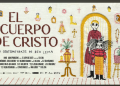
El Cuerpo de Cristo is a film that has been repeatedly mistaken for stop-motion animation—and that confusion is understandable. The movement feels deliberate and tactile, the surfaces appear physically constructed, and the imagery carries the unmistakable weight of handmade labor. Yet this short film is not stop motion. It is a hybrid production that combines real, physically embroidered environments with digitally animated characters, crafted to visually echo the logic of stitched textiles and frame-by-frame motion.
Directed by Spanish illustrator and comic artist Bea Lema, the twelve-minute short adapts her award-winning graphic novel of the same name, which earned Spain’s National Comic Award. The story draws from Lema’s own experiences, focusing on a woman named Adela whose struggle with mental illness unfolds within a domestic and cultural landscape shaped by religion, family expectations, and social misunderstanding. Rather than sensationalizing psychosis, the film presents it with restraint and empathy, emphasizing lived experience over spectacle.
What makes El Cuerpo de Cristo especially notable for animation practitioners is how its visual language was constructed. Every background seen in the film physically exists. More than thirty embroiderers produced the environments using fabric, thread, and traditional stitching techniques. These textile artworks were then scanned and assembled digitally, forming the foundation of each scene. Over these tangible surfaces, characters and props were animated digitally using Blender, with custom tools developed to mimic the spacing, rhythm, and texture of embroidery stitches.
This approach places the film outside the technical definition of stop motion while keeping it philosophically adjacent. No puppets were animated frame by frame, and no physical characters were moved incrementally between exposures. However, the production workflow shares key principles with stop motion: materials were fabricated before animation began, physical constraints informed visual decisions, and the final image is rooted in objects that exist in the real world. Digital animation was used not to replace craft, but to extend it.
For stop-motion artists, this distinction is important—and productive. El Cuerpo de Cristo demonstrates a viable path for incorporating textile-based aesthetics into animation without requiring fully physical character animation. Practical embroidery can function as set design, texture source, or scanned environment, while digital animation handles performance and timing. For productions where animating embroidered characters frame by frame would be impractical or prohibitively time-consuming, this hybrid method offers an alternative that preserves the handmade sensibility audiences associate with stop motion.
Sound design further grounds the film in material reality. The opening sequence incorporates archival audio recordings captured in 1970s Galicia by a Danish anthropologist documenting real religious exorcism rituals. These raw recordings—voices, prayers, communal intensity—anchor the film in cultural history rather than fictional horror tropes. Paired with the soft, colorful embroidery aesthetic, the sound creates a tension that deepens emotional impact without relying on shock.


The film premiered at Zinebi in Bilbao and has screened internationally, including at the International Film Festival Rotterdam, where it quickly drew attention for both its subject matter and its unconventional production process. Festival audiences have often expressed surprise upon learning how the film was made, assuming the embroidery effect was either traditional stop motion or entirely digital simulation. In reality, the strength of the film lies in its insistence on material truth: the embroidery is real, the imperfections are real, and the digital layer exists to harmonize with those physical elements.
While El Cuerpo de Cristo should not be categorized as a stop-motion film, it holds clear relevance for the stop-motion community. It challenges rigid definitions of handmade animation and shows how physical craft and digital tools can coexist without diminishing either. For artists interested in textiles, mixed media, or expanding the visual language of stop motion through hybrid workflows, Bea Lema’s debut stands as both inspiration and proof of concept.
Ultimately, the film’s technical ingenuity never overshadows its emotional core. By translating embroidery—a medium associated with care, domesticity, and memory—into motion, El Cuerpo de Cristo reframes psychological suffering through empathy rather than fear. It is a thoughtful, carefully constructed work that reminds us that innovation in animation does not always mean abandoning the handmade, but finding new ways to carry it forward.
Sources
-
Cartoon Brew – Stitched Into Motion: Bea Lema Brings Embroidery To Animation In ‘El Cuerpo de Cristo’
https://www.cartoonbrew.com/shorts/bea-lema-el-cuerpo-de-cristo-258549.html -
Aguilar de Campoo Film Festival – El Cuerpo de Cristo
https://aguilarfilmfestival.es/cortometraje/el-cuerpo-de-cristo/ -
RTVE – ‘El cuerpo de Cristo’, Premio Nacional del Cómic, Bea Lema salta a la animación
https://www.rtve.es/noticias/20251005/cuerpo-cristo-premio-nacional-comic-bea-lema-salta-a-animacion/16756750.shtml -
IMDb – El Cuerpo de Cristo
https://www.imdb.com/title/tt38575422/ -
El Cuerpo de Cristo – Official Trailer
https://www.youtube.com/watch?v=Tp0733RprD0