Winter in March: Natalia Mirzoyan’s Haunting Stop-Motion Journey Through Exile
Armenia • Belgium • Estonia • France | 2025 | Stop-Motion Animation | 16 min 22 sec
When snow falls across the borders of memory and migration, it often carries more than cold—it carries silence, loss, and longing. In Winter in March, Armenian director Natalia Mirzoyan crafts a deeply moving stop-motion short that captures this frozen moment in time, merging personal trauma with poetic surrealism.
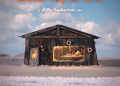
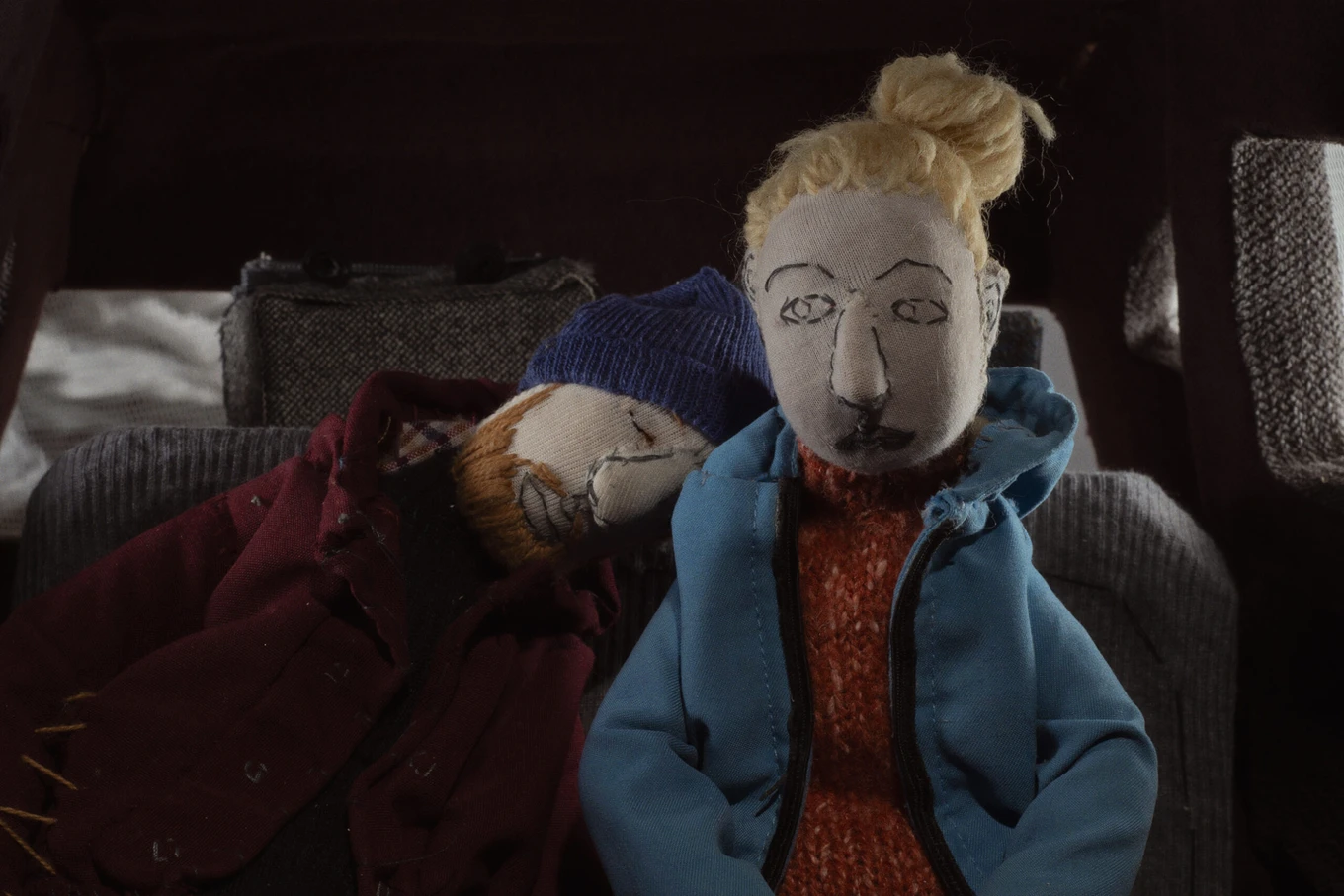
Produced as a co-production between ArtStep Studio (Armenia), Rebel Frame (Estonia), Black Boat Pictures (France), and White Boat Pictures (Belgium), the 16-minute puppet-animated film follows a young couple—Kirill and Dasha—as they flee their homeland after the outbreak of the war in Ukraine. Their path from Russia toward Georgia becomes an otherworldly odyssey through snow-covered landscapes, border lines, and inner fears.
A Personal Story Told Through Puppets and Textures
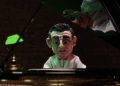
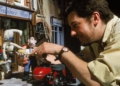
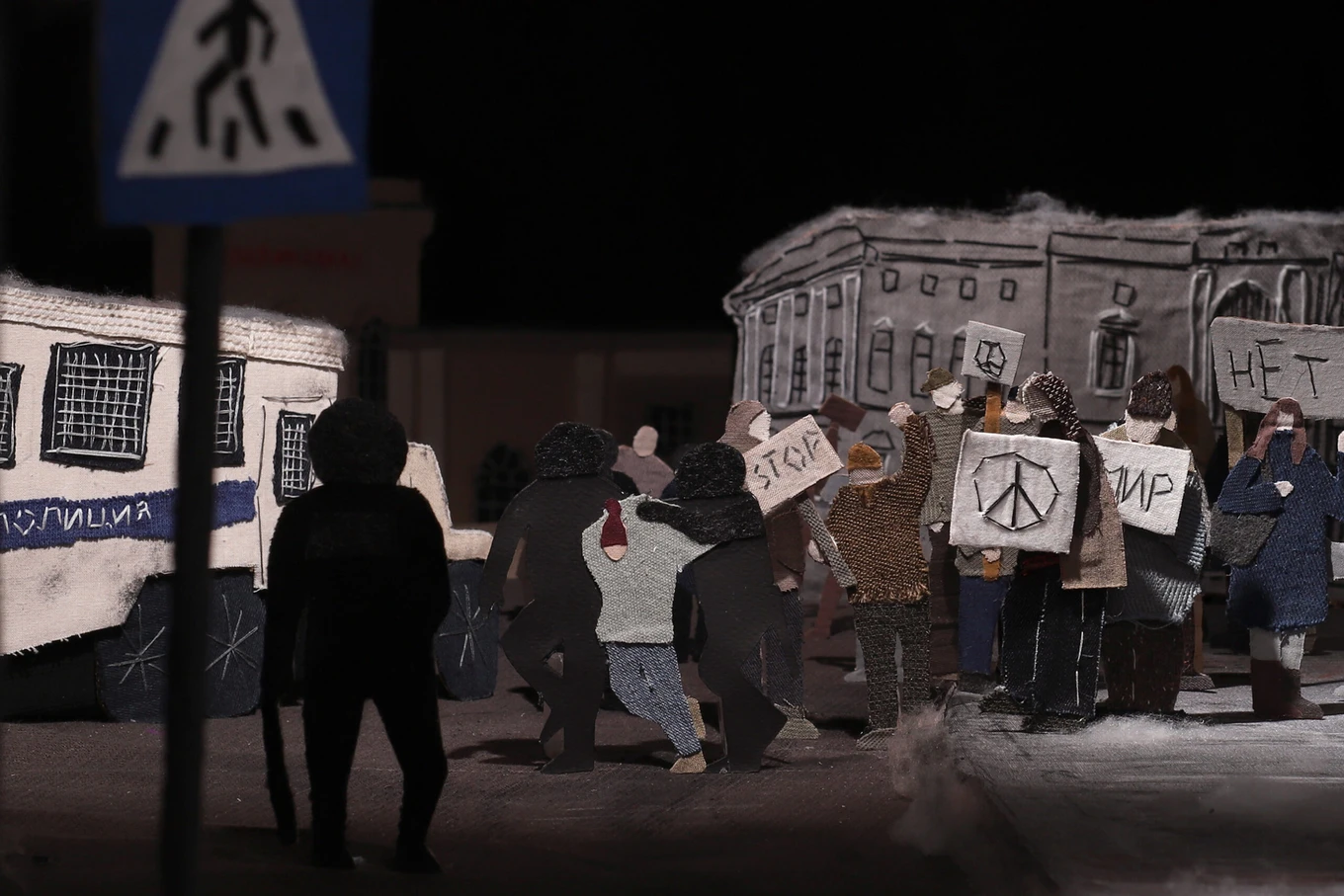
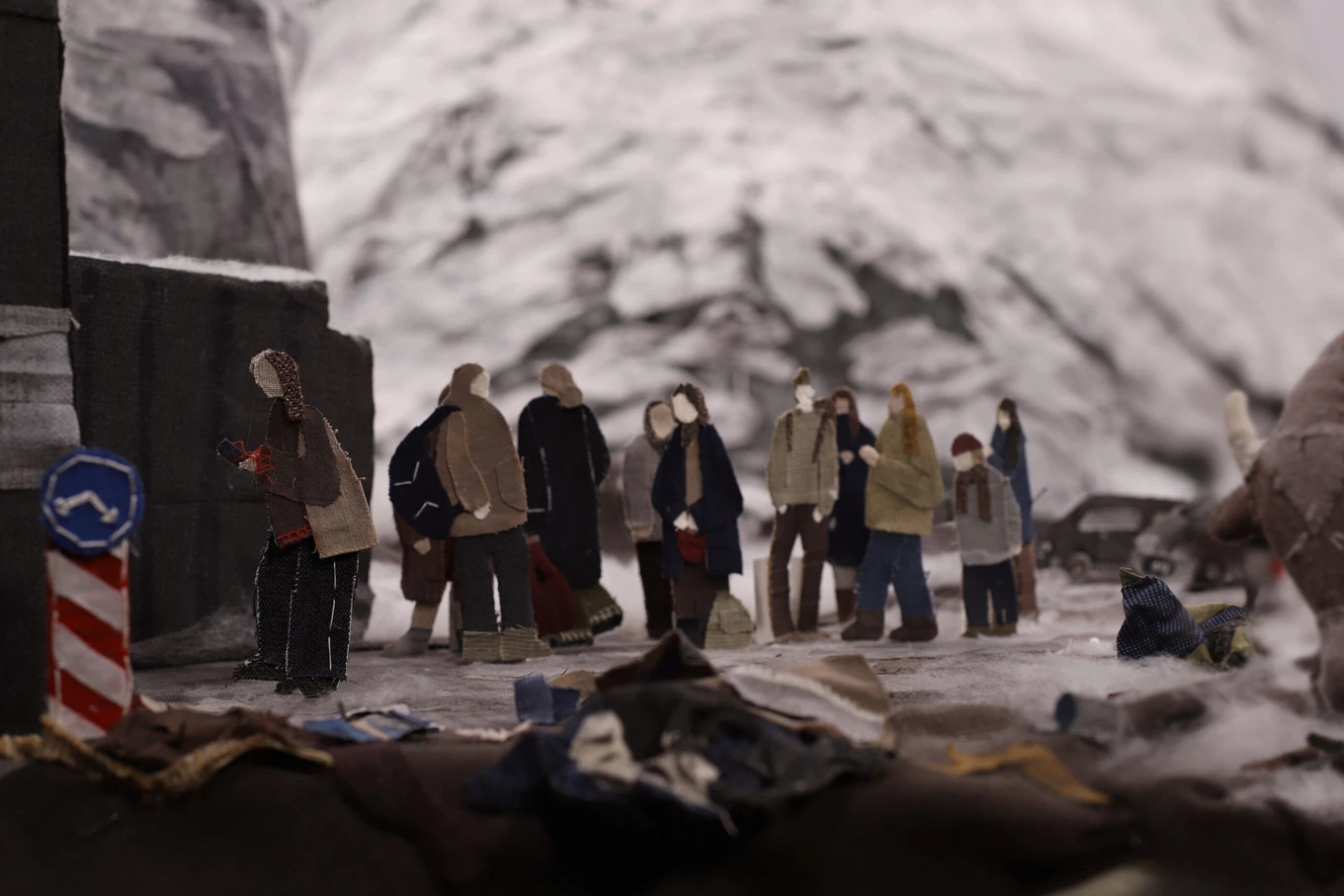
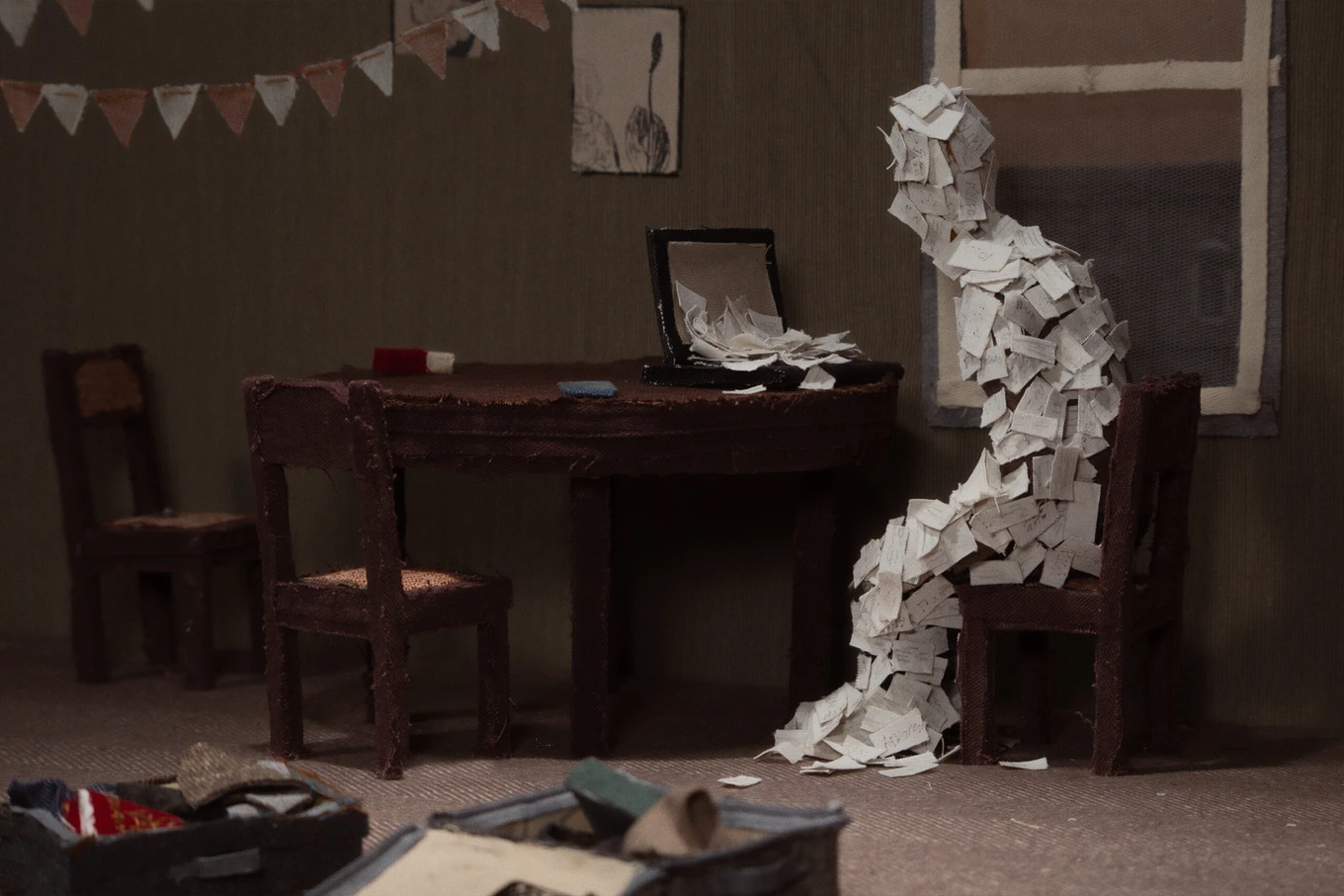
Mirzoyan, known for her emotionally resonant animation style (Five Minutes Older, My Little Goat), approaches Winter in March as a hybrid between documentary and poetic stop-motion—what some critics have called an “animadoc.” Using handmade puppets, fabric, and snow-like cotton textures, she transforms real testimonies from Russian friends and artists—people who felt powerless and horrified by unfolding events—into a surreal, dreamlike narrative.
“I wanted to capture the psychological snowstorm that comes with exile,” Mirzoyan has shared in interviews. The visual language echoes this sentiment: muted grays, slow-moving camera pans, and stillness that feels suffocating. Each frame looks as though it were sculpted from memory itself.
Co-written with Daria Nikitina, the film balances intimacy with universality. There are no overt political speeches—just the quiet dread of displacement and the dissonance between home and conscience.




A Collaboration Across Borders
Winter in March was realized through the combined efforts of several European studios and the Animation Department of the Estonian Academy of Arts, where Mirzoyan received technical and artistic support.
The film’s haunting score by Evgeny Fedorov and atmospheric sound design by Sander Põldsaar deepen the emotional resonance, while Rebeka Kruus’s co-animation adds subtlety to every puppet gesture.
The result is a rare instance of international cooperation where Armenia, Estonia, France, and Belgium united around a single, delicate artistic vision—a fitting mirror to the film’s theme of crossing boundaries.
Cannes Triumph and Global Recognition
Premiering in the La Cinef competition at the 2025 Cannes Film Festival, Winter in March captured the hearts of both jury and audiences, earning the 3rd Prize (ex aequo) among over 2,600 submissions from film schools worldwide. The win marked a milestone—the first Armenian co-produced animated film ever to receive a La Cinef award.
The Cannes jury praised the film for its “emotional authenticity and bold visual metaphors,” underscoring how stop-motion remains one of the most expressive mediums for stories about human fragility.
A Reflection on Conscience and Courage
While Winter in March tells a story of flight and fear, it is ultimately about moral awakening—the moment one decides to leave comfort for conscience. Mirzoyan’s use of stop-motion amplifies the fragility of human figures; each puppet’s slow, trembling motion reminds us that leaving one’s home is both a physical and spiritual unraveling.
Through handcrafted detail and quiet empathy, Winter in March becomes more than an animated short—it’s a document of displacement, a poem about survival, and a testament to the power of stop-motion to humanize the political.
Film Credits
Director / Writer / Animator / Editor / Production Design: Natalia Mirzoyan
Co-Writer: Daria Nikitina
Co-Animator: Rebeka Kruus
Cinematography / Sound: Sander Põldsaar
Music: Evgeny Fedorov
Production: ArtStep Studio (Armenia), Rebel Frame (Estonia), Black Boat Pictures (France), White Boat Pictures (Belgium)
Supported by: Estonian Academy of Arts