A reader opens a book, and the distance between her room and an imagined world begins to disappear. In LIGHT HOLE, director Toru Katori and animation director Takuro Oishi make that familiar experience of reading into a physical adventure. Produced by Geek Pictures for Kodansha, the film sends its heroine into a universe constructed from printed paper.
The publication pages supply both the imagery and the building material. Streets, figures, and spectacular encounters grow out of content associated with Kodansha’s catalogue, including AKIRA, Ghost in the Shell, Initial D, and Attack on Titan. Instead of treating these works only as references, the production makes the printed surface part of the world’s visible structure. [1]
From page to dimensional action
The official production account identifies LIGHT HOLE as its third branded film and reports 49 shooting days, with up to 12 frames photographed per second. Katori describes an adventure in which the girl rides the motorcycle from AKIRA, encouraging viewers to look for familiar scenes and works within the paper constructions. [1]
The film’s premise embodies the publisher’s purpose, “Inspire Impossible Stories.” It connects the physical act of publishing with the worlds readers build in their imaginations. The official credits name Katori as director, Oishi as animation director, and Geek Pictures as the production company. [1]
Oishi explained that preparing the individual shots was demanding, particularly when the team introduced expressions associated with 2D animation into dimensional stop motion. A sequence involving a giant’s arm required the filmmakers to develop an appropriate shooting approach. The challenge was to preserve the energy of drawn imagery while working with physical objects. [2]
The stills reveal a compelling tension between surface and depth. Printed marks remain visible across sculpted forms, while lighting and perspective make the city feel inhabitable. The red-clad central figure provides a strong visual anchor among busy walls, signs, and layered paper textures. The material never loses its identity, even as it becomes architecture or a looming face.
That is the film’s most persuasive achievement: its craftsmanship serves the story’s central transformation. Paper carries stories on the page, then becomes the means of entering them. The miniature construction gives an abstract act of imagination a vivid physical form.
Behind the scenes
Making-of video: Kodansha / Geek Pictures.
Images from the production
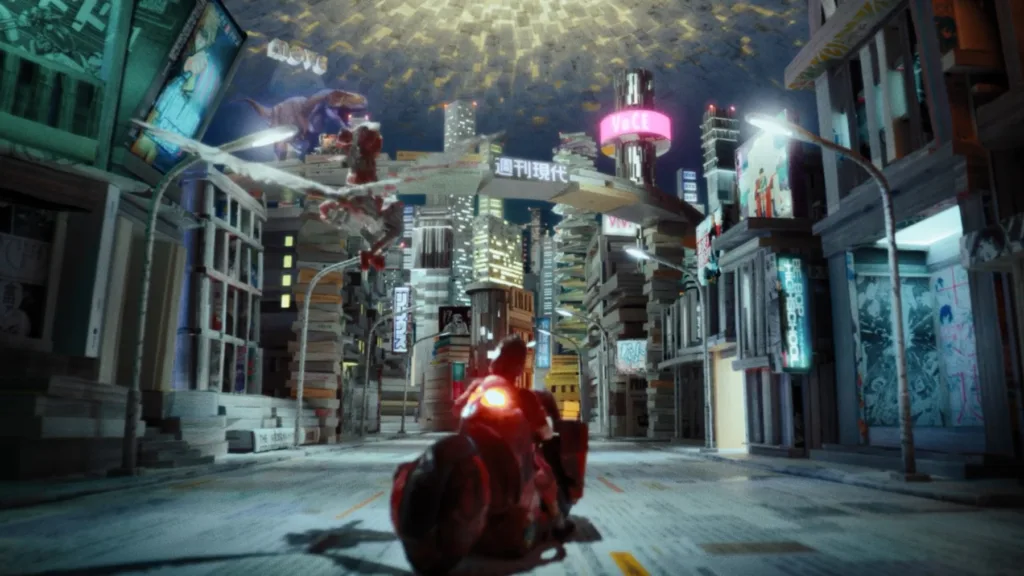
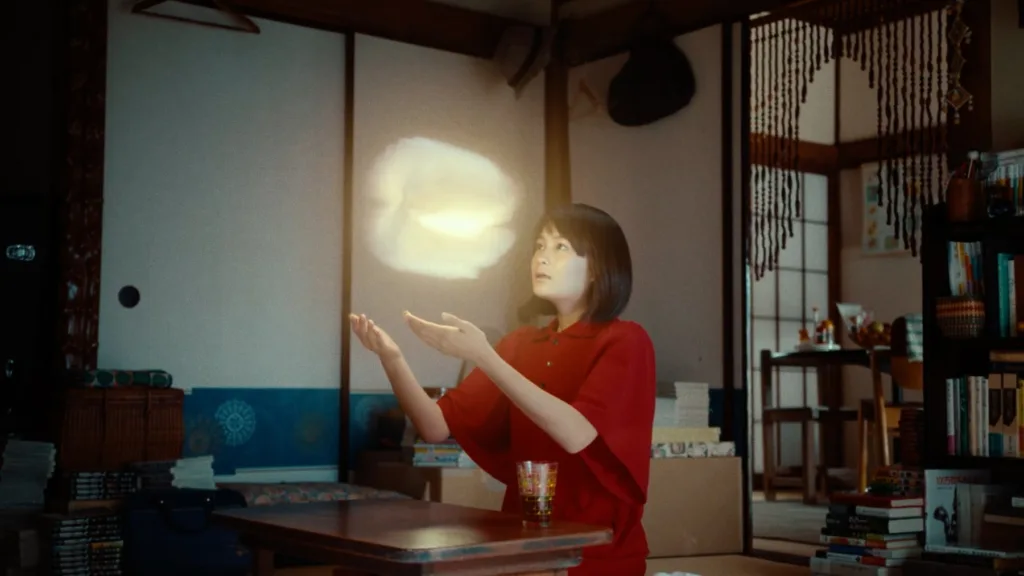
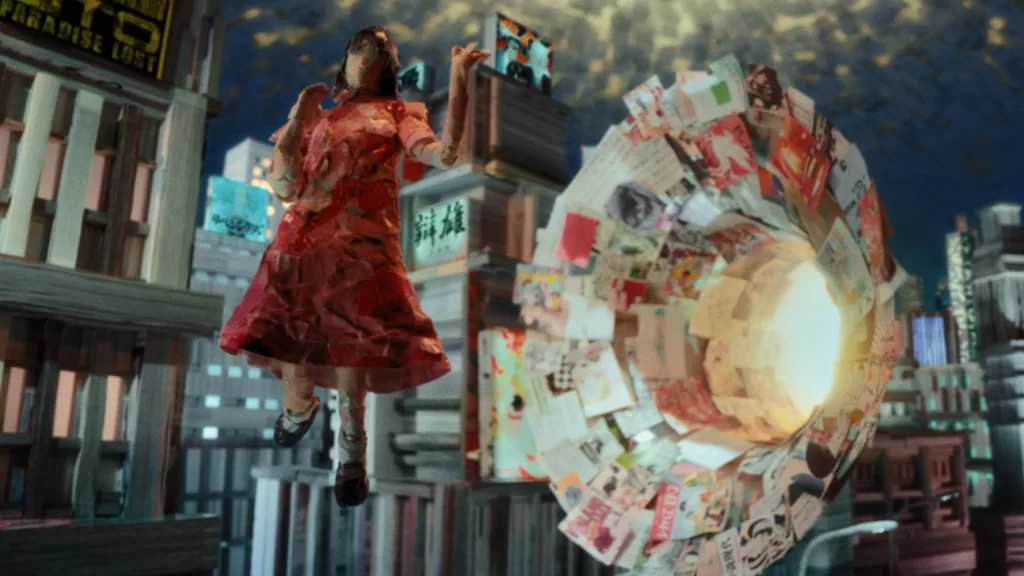
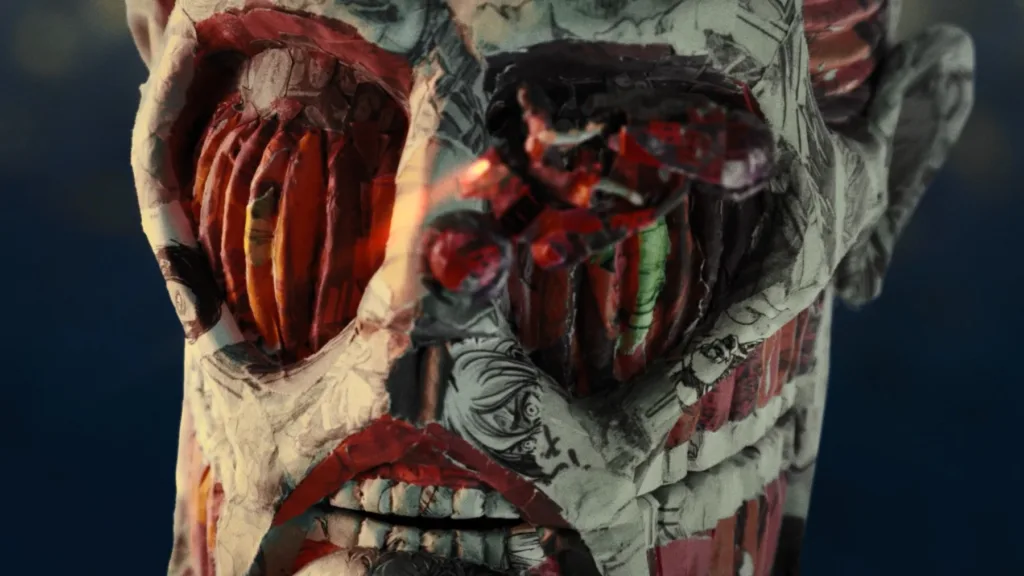
LIGHT HOLE. Film still: Kodansha / Geek Pictures; underlying manga artwork belongs to its respective creators.
References
- Kodansha — Kodansha’s official project account.
- Dragonframe — Filmmaker interview and production details.