• Subscribe
  • Login
  • My Account
  • Logout
Subscribe
Stop Motion Magazine
  • Home
  • News
    • Festivals
    • TV
    • Movies
    • Short Films
    • Music Videos
    • Technology
    • Learning
    • Video Games
  • Issues
    • Current Issues
    • Issues Archive
  • Tools & Apps
    • Swap Animator Plugin for Blender
    • Lipsync Calculator
    • Frame & Exposure Calculator
    • Animation Budget Calculator
    • Invoice Builder
    • Frame Grabber – Lite
    • SMM FX for After Effects
  • Resources
    • Animation Supplies
    • Studios
    • Blogs
    • Links
  • Calendar
  • About
    • About
    • Advertise
    • Contact
  • Learn
    • Manual for Molding and Casting
  • Privacy Policy
  • Shop
No Result
View All Result
  • Home
  • News
    • Festivals
    • TV
    • Movies
    • Short Films
    • Music Videos
    • Technology
    • Learning
    • Video Games
  • Issues
    • Current Issues
    • Issues Archive
  • Tools & Apps
    • Swap Animator Plugin for Blender
    • Lipsync Calculator
    • Frame & Exposure Calculator
    • Animation Budget Calculator
    • Invoice Builder
    • Frame Grabber – Lite
    • SMM FX for After Effects
  • Resources
    • Animation Supplies
    • Studios
    • Blogs
    • Links
  • Calendar
  • About
    • About
    • Advertise
    • Contact
  • Learn
    • Manual for Molding and Casting
  • Privacy Policy
  • Shop
Stop Motion Magazine

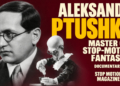
Aleksandr Ptushko: From Puppet Performance to Soviet Screen Fantasy

stopmo by stopmo
November 17, 2026
in Learning, Movies
0 0
0
Home Learning
0
SHARES
1
VIEWS
Share on FacebookShare on TwitterPin This!

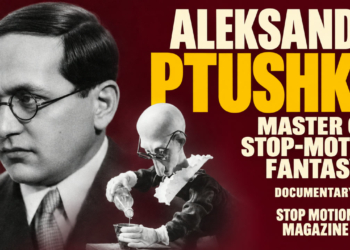
Watch Stop Motion Magazine’s Aleksandr Ptushko documentary above. Episode 008 follows a career that moved from miniature puppet performances to elaborate screen fantasies, tracing the artists and practical methods behind the images.

Aleksandr Ptushko’s films invite us to look at scale: a boy towering over a puppet city, a wooden hero sharing a scene with human performers, a dragon occupying a battlefield. Across those very different worlds, the challenge remains recognizable to any stop-motion filmmaker. How do you make an object feel alive, and how do you make its surroundings belong to the same story?

A puppet enters the human world

Born in Luhansk in 1900, Ptushko entered filmmaking in 1927, working on puppets and scenery for Yuri Merkulov’s The Lost Letter. His early directing work included An Incident at the Stadium and The Encoded Document in 1928, followed by A Hundred Adventures in 1929. The small puppet Bratishkin brought animation into scenes with live performers, establishing an interest in combining people and constructed characters that would run through his career.[1][3]

These shorts were also products of their social setting: advertising, public instruction and political messaging were part of the work. The later Master of Everyday Life (1932) helped prepare the way for a much larger undertaking. Ptushko’s experiments were becoming a workshop practice, with the demands of a feature-length production ahead.[1]

The New Gulliver: design becomes performance

The New Gulliver (1935) placed a live-action boy inside an animated Lilliput. Its story recast Swift through a Soviet political lens: the boy dreams of a miniature society divided between rulers and workers. Understanding that setting matters, because the characters’ social roles shaped their physical design.[1][2]

Ptushko’s own account describes a production lasting twenty-one months. Puppet artist Sarra Mokil had to develop distinct groups of characters while giving individuals recognizable personalities. Olga Tayozhnaya’s worker figures used an elastic material over metal frameworks; their surfaces required repair during animation. Replacement facial phases supplied expressions and helped the puppets speak and sing. This was sculpture organized for movement, with each face and material choice judged by what it could do on film.[2]

That achievement depended on a collective effort. Alongside Mokil and Tayozhnaya, Yuri Shvets contributed the miniature world’s design and Nikolai Renkov worked on its photographic construction. The film is a useful reminder that a director’s name can stand for a production whose expressive life is distributed across many hands.[2][3]

Inside the workshop
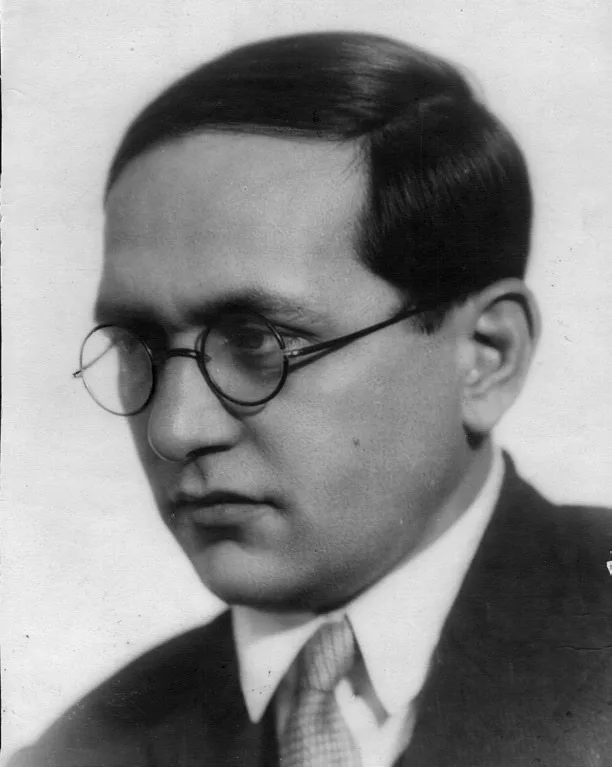
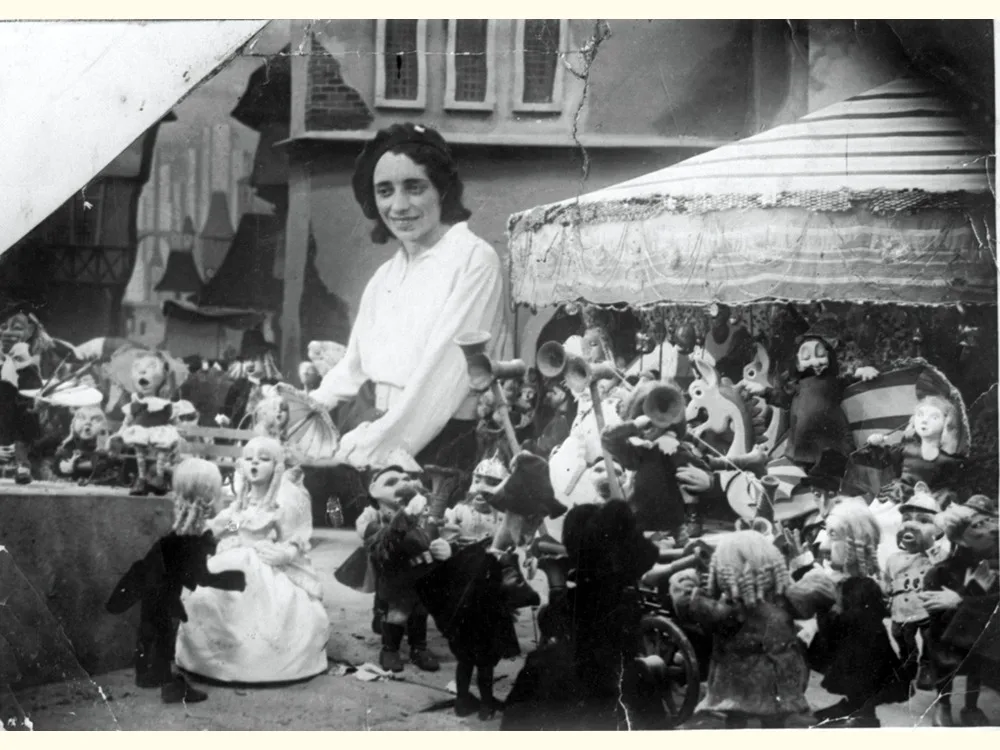
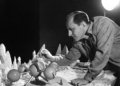
  • Portrait of filmmaker Aleksandr Ptushko.
  • Sarra Mokil working with miniature puppets.
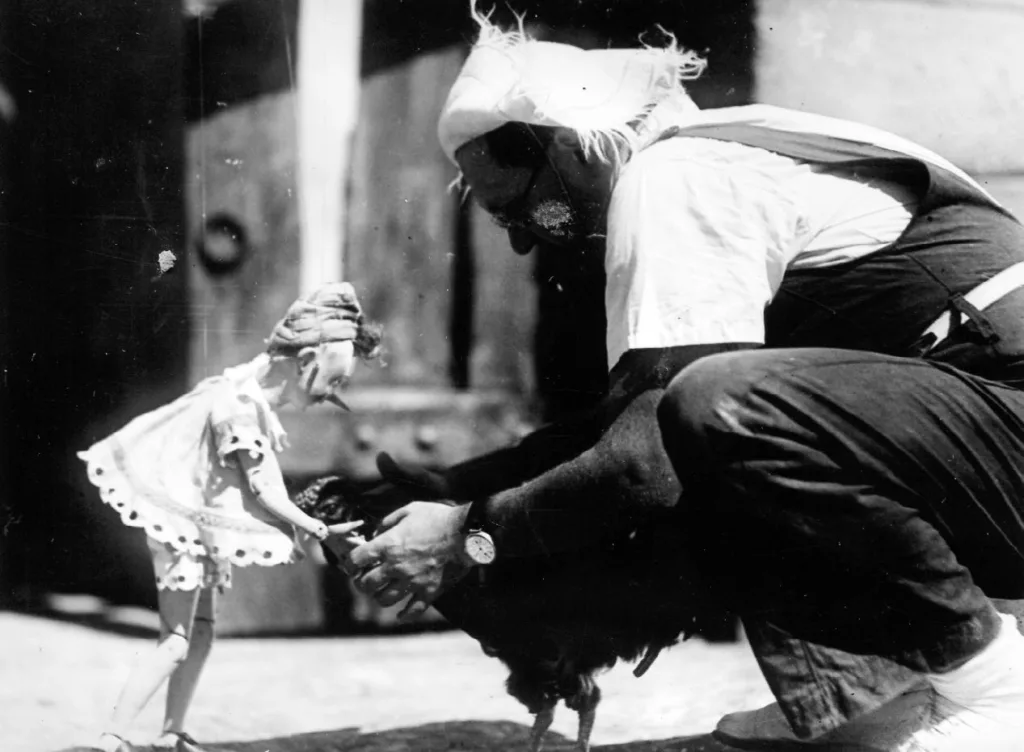
  • Aleksandr Ptushko with Buratino during The Golden Key production.
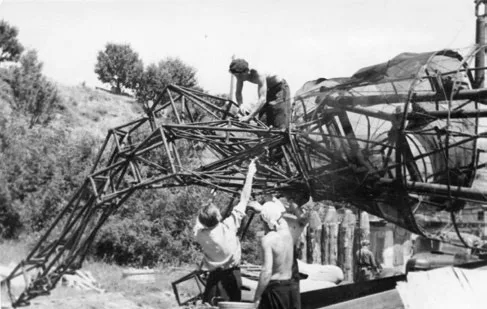
  • The dragon being constructed for Ilya Muromets.
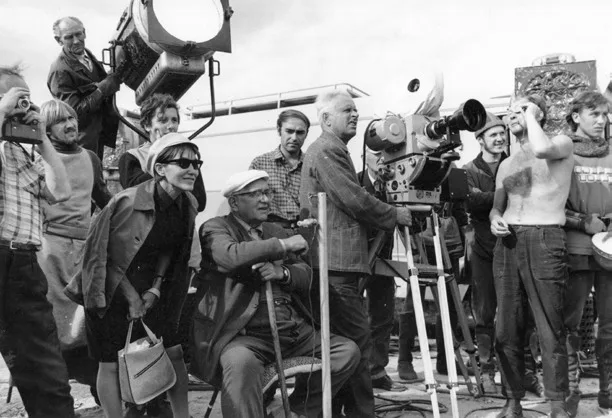
  • Aleksandr Ptushko with the crew of Ruslan and Ludmila.

Archival slideshow, in order: Ptushko portrait; Sarra Mokil working with puppets; Ptushko with Buratino for The Golden Key; construction of the dragon for Ilya Muromets; Ptushko with the Ruslan and Ludmila crew. Sources: State Central Museum of Cinema and Mosfilm archive.[1][3]

The work surrounding Gulliver deserves attention beyond a single celebrated title. Ptushko directed the color puppet film The Tale of the Fisherman and the Fish (1937) and Merry Musicians. He also wrote, designed or supervised work made by other directors. The Turnip and The Fox and the Wolf, for example, were directed by Mokil. Keeping those credits separate makes the workshop’s history richer and gives its filmmakers their due.[3][4]

The Golden Key (1939), adapted from Alexei Tolstoy’s Buratino story, returned to the meeting of live action and puppet animation. Renkov and Shvets again appear among its principal collaborators. Ptushko’s wider career also included effects assignments, instructional work, wartime filmmaking, leadership at Soyuzmultfilm and teaching. A filmography organized only around his best-known features leaves much of that activity out.[3][5]

Color, miniatures and the scale of fantasy

With The Stone Flower (1946), the craftsmanship of a fairy-tale world became inseparable from color. Its story of a stone carver and the Mistress of the Copper Mountain drew on Pavel Bazhov, and the film received the international color prize at Cannes in 1946.[6][7]

The postwar features broadened Ptushko’s range. He co-directed Three Encounters (1948), then made Sadko and the widescreen epic Ilya Muromets (1956). The Soviet-Finnish Sampo adapted the world of the Kalevala; its restoration history records the combination of Sovcolor photography and Dyaliscope widescreen. These films moved the practical problems of miniature filmmaking into increasingly expansive settings.[4][7][8]

Ptushko’s technical writing is especially revealing here. In a lecture on trick photography, he stressed the importance of scale in model construction and described ways to combine miniatures with people. Perspective alignment, painted extensions and separately photographed elements offered different solutions. The lesson for a filmmaker is practical: decide what the shot needs, then choose a method that makes its space convincing. Stop motion was one part of that toolkit.[9]

The later films—and the importance of precise credits

Scarlet Sails (1961), The Tale of Lost Time (1964) and The Tale of Tsar Saltan (1966) show how widely Ptushko worked within literary fantasy. Romance, comic transformation and fairy-tale spectacle each required a different balance of performance and visual invention.[4][7]

Viy (1967) needs a particular distinction. Konstantin Yershov and Georgy Kropachyov directed the film. Ptushko was a co-writer and contributed artistic supervision and effects expertise. Its association with his name is understandable, but calling it simply a film he directed erases the credited directors.[3][10]

His final feature, Ruslan and Ludmila (1972), returned to Pushkin on a grand scale. Its restoration offers another opportunity to study how performers, sets and photographic effects share a frame. Ptushko died in 1973, leaving a body of work that extends well beyond a single medium or production role.[3][11]

Seen together, these films make a compelling case for studying stop motion alongside the broader history of practical effects. A puppet’s face, a miniature building and a painted extension solve different problems, yet all depend on careful observation and the audience’s willingness to believe. Our documentary follows that larger career while keeping its puppet-making foundations in view.

Continue exploring the series with George Pal: From Puppetoons to Worlds of Wonder.

References

  1. Mosfilm — Aleksandr Lukich Ptushko and His New Gulliver.
  2. Aleksandr Ptushko, republished by Chapaev — How The New Gulliver Was Made (1935).
  3. State Central Museum of Cinema — Ptushko: Miracles, and Nothing Else! exhibition.
  4. Chapaev — Filmography of Aleksandr Ptushko.
  5. Mosfilm — The Golden Key: credits and synopsis.
  6. Festival de Cannes — Kamennyj Cvetok: 1946 selection and color prize.
  7. Mosfilm — A Great Storyteller and Bold Innovator: Ptushko at 120.
  8. KAVI, National Audiovisual Institute — Restoration Report: Sampo.
  9. Aleksandr Ptushko, republished by Chapaev — Trick and Combined Photography.
  10. Mosfilm — Viy: credits and synopsis.
  11. Mosfilm — Ruslan and Ludmila: 4K Restoration Premiere.
Tags: Aleksandr PtushkoAnimation HistoryDocumentarypractical effectsStop MotionThe New Gulliver
ShareTweetPinScan
Previous Post

George Pal: From Puppetoons to Worlds of Wonder

Please login to join discussion
Swap Animator plugin for Blender Swap Animator plugin for Blender Swap Animator plugin for Blender
  • Trending
  • Comments
  • Latest
The Lost World

The History of Stop Motion – In A Nutshell

June 4, 2016
Two characters seated beside a small fire in a forest.

Soul Catcher: A Magical Work of Stop Motion Rooted in Ancestral Love

November 4, 2026
Michael Jackson-inspired skeleton puppet with Bubbles

Michael and Bubbles: This Dark Comedy Stop-Motion Animated Music Video

June 14, 2016
Fantastic mr fox

Eleven years of Fantastic Mr. Fox

October 6, 2020
Animator Art Clokey arranging clay figures on a set

Art Clokey – Clay Animation Master

June 4, 2016
Aleksandr Ptushko documentary artwork with the filmmaker and a puppet from The New Gulliver.

Aleksandr Ptushko: From Puppet Performance to Soviet Screen Fantasy

0
George Pal seated on the floor among his Puppetoon characters, in the documentary title frame.

George Pal: From Puppetoons to Worlds of Wonder

0
Hermína Týrlová working with a cloth character, beside the title of the Stop Motion Magazine documentary.

Hermína Týrlová: The Woman Who Brought Toys to Life

0
Jiří Trnka documentary title card with the filmmaker working at his studio.

Jiří Trnka: The Poet of Puppet Animation

0
Ray Harryhausen animating the gorilla model for Mighty Joe Young

Ray Harryhausen: A Lifetime of Creatures, A World of Influence

0
Aleksandr Ptushko documentary artwork with the filmmaker and a puppet from The New Gulliver.

Aleksandr Ptushko: From Puppet Performance to Soviet Screen Fantasy

November 17, 2026
George Pal seated on the floor among his Puppetoon characters, in the documentary title frame.

George Pal: From Puppetoons to Worlds of Wonder

November 16, 2026
A camping puppet listens through headphones in Need a Good Sleep?

Joseph Wallace Makes Room for Rest in Need a Good Sleep?

November 16, 2026
An orange felt puppet held in a maker’s hand.

Isabel Garrett’s Felted World for Coldplay’s feelslikeimfallinginlove

November 15, 2026
Faceted paper trees, clouds and a deer form a miniature forest

Vetor Zero Builds a Graphic World from Recycled Paper

November 14, 2026

Popular

  • Aleksandr Ptushko documentary artwork with the filmmaker and a puppet from The New Gulliver.

    Aleksandr Ptushko: From Puppet Performance to Soviet Screen Fantasy

    0 shares
    Share 0 Tweet 0
  • George Pal: From Puppetoons to Worlds of Wonder

    1 shares
    Share 0 Tweet 0
  • Hermína Týrlová: The Woman Who Brought Toys to Life

    2 shares
    Share 1 Tweet 1
  • Jiří Trnka: The Poet of Puppet Animation

    3 shares
    Share 1 Tweet 1
  • Ray Harryhausen: A Lifetime of Creatures, A World of Influence

    2 shares
    Share 1 Tweet 1
Stop Motion Magazine

Stop Motion Magazine is a resource built for the animation community to find the latest news, behind the scenes, and special events from around the world. The website serves as a gateway to the stop motion community and industry.

Popular Tag

Aardman Aardman Animations Animated Short Film Animation Animation festivals Animation History Behind the Scenes Christmas Clay Animation Claymation Early Man European animation Experimental Animation Featured Featured Artist Felt Animation Festival Festival Stop Motion Montréal Found Object Animation Handcrafted animation Handmade animation Independent Animation LAIKA Music Video Paper Animation Plasticine Puppet Animation Ray Harryhausen Shaun the Sheep Short Film spotlight Spot Light spotlite stop-motion animated short film Stop Motion Stop Motion Animation Stop Motion Film Stop Motion Magazine stop motion object stop motion puppet stop motion puppets Stop Motion Short Film student animation student film Trending Now

Recent News

Aleksandr Ptushko documentary artwork with the filmmaker and a puppet from The New Gulliver.

Aleksandr Ptushko: From Puppet Performance to Soviet Screen Fantasy

November 17, 2026
George Pal seated on the floor among his Puppetoon characters, in the documentary title frame.

George Pal: From Puppetoons to Worlds of Wonder

November 16, 2026
  • About
  • Advertise
  • Privacy Policy
  • Terms of Service
  • Refund & Cancellation Policy
  • Contact

© 2009–2026 Stop Motion Magazine. All rights reserved.

Welcome Back!

Login to your account below

Forgotten Password? Sign Up

Create New Account!

Fill the forms below to register

All fields are required. Log In

Retrieve your password

Please enter your username or email address to reset your password.

Log In
  • Login
  • Sign Up
  • Cart
No Result
View All Result
  • Home
  • News
    • Festivals
    • TV
    • Movies
    • Short Films
    • Music Videos
    • Technology
    • Learning
    • Video Games
  • Issues
    • Current Issues
    • Issues Archive
  • Tools & Apps
    • Swap Animator Plugin for Blender
    • Lipsync Calculator
    • Frame & Exposure Calculator
    • Animation Budget Calculator
    • Invoice Builder
    • Frame Grabber – Lite
    • SMM FX for After Effects
  • Resources
    • Animation Supplies
    • Studios
    • Blogs
    • Links
  • Calendar
  • About
    • About
    • Advertise
    • Contact
  • Learn
    • Manual for Molding and Casting
  • Privacy Policy
  • Shop

© 2009–2026 Stop Motion Magazine. All rights reserved.

This website uses cookies. By continuing to use this website you are giving consent to cookies being used. Visit our Privacy and Cookie Policy.